
Know your honey · 4 min read
The master floral index: every plant we've written about, across both valleys
Over a hundred posts, we've looked closely at the plants of the Kalka foothills and the Lahaul cold desert, and checked a few that turned out not to grow in either. Here they all are in one table, each linked to its story.
By Akhil Verma, Co-founder, Not Your Beesness ·
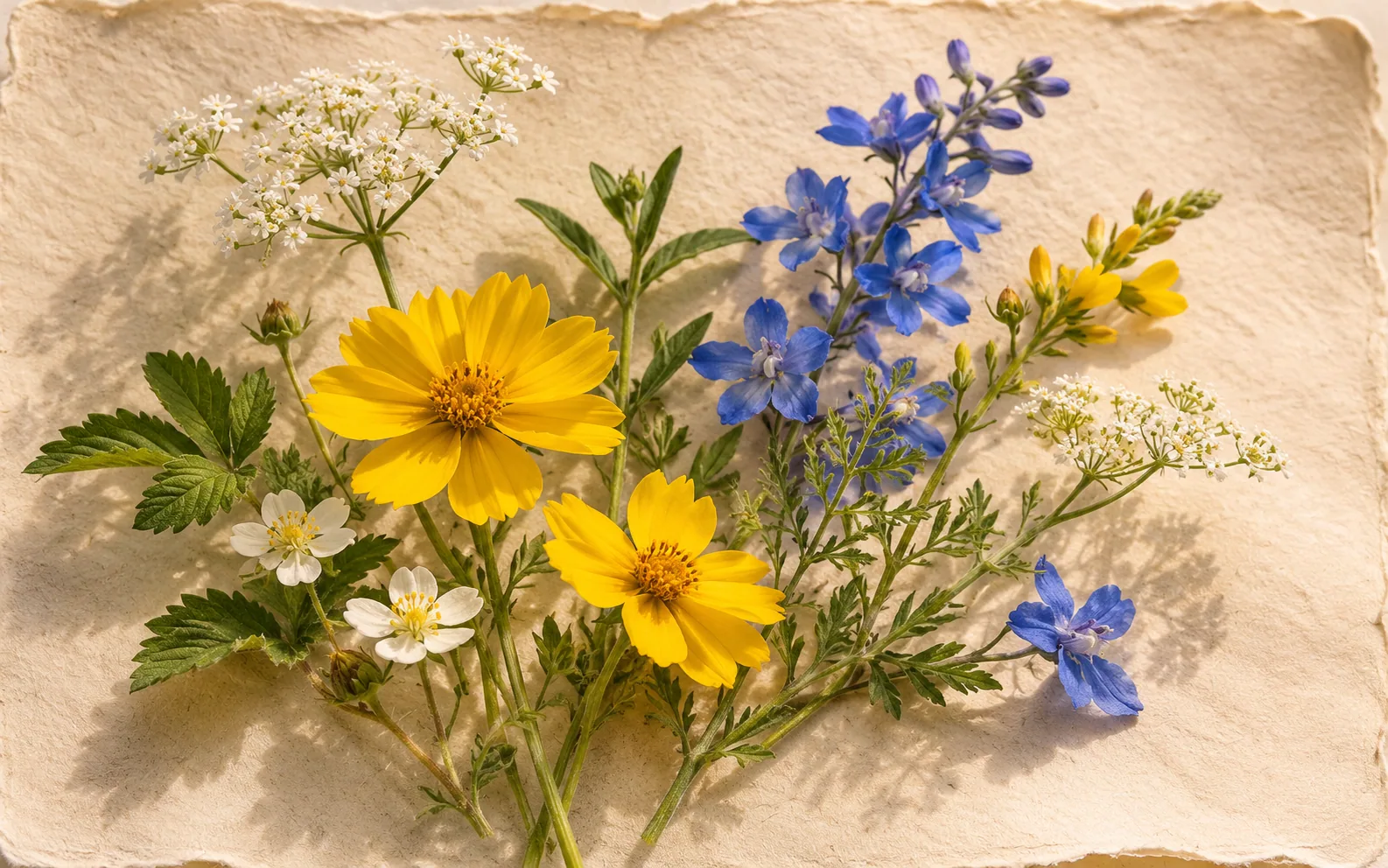
This is the last post in our long run on the Kalka foothills and the Lahaul valley. It gathers every plant we've written about into one table.
Quick answer: This floral index lists every plant we've covered: 23 entries for the Kalka foothills and plains, 16 for Lahaul, and 3 we checked and ruled out. It's a guide to the landscape, not a list of what's in our jars.
We were asked for "the final catalogue of all 45+ flowers tracked in our two valleys". We have to be precise about one word: these plants aren't tracked in our honey. They're the plants of our two landscapes that we've researched. Only pollen analysis could show which ones made it into a jar, and we don't claim that.
 A guide to our two landscapes, not a list of what's in the jar.
The Kalka foothills and plains
| Plant | What it gives bees | Read more |
|---|---|---|
| Mustard | Winter nectar and pollen on the plains | Mustard honey |
| Basuti, binda, dhawai, karonda, kadi patta | Scrub flowers through the year | Shivalik shrubs |
| Ber and jharberi | Nectar from the jujube family | Jujube honey |
| Khair, siris, kikar | Acacia-family trees that feed bees | Acacia honey |
| Amaltas | Mostly pollen, little nectar | Amaltas |
| Palash | Built for birds; few honeybees | Palash |
| Semal | Big nectar cups; birds and bees | Semal |
| Kachnar | Spring bloom of the foothills | Early March harvest |
| Mango | Visited mostly by small flies | Mango blossom |
| Eucalyptus (safeda) | Big late-winter flow on the plains | Eucalyptus honey |
| Shisham | Riverbank tree bees use | Riverbed flora |
| Lantana | Mostly butterflies; invasive | Lantana |
| Tulsi, pudina and wild mints | Bee-friendly herbs | How to taste honey |
| Raat ki rani, harsingar | Night flowers; little for honeybees | Night flowers |
| Berseem | Clover that draws bees when it flowers | Berseem and senji |
| Senji (sweet clover) | Nectar weed of field edges | Sweet clover honey |
| Himalayan musk rose | Pollen only, no nectar | Roses and honey |
| Ban oak | No nectar; oak honey is honeydew | Oak honey |
| Chir pine | No nectar; honeydew possible | Pine honeydew |
| Bamboo | Wind-pollinated; rare flowering | Bamboo honey |
| Ivy | Rich late flower abroad; unrecorded near Kalka | Ivy and bees |
| Neem | Little nectar; mostly pollen | Neem honey |
| Footpath weeds | Carry bees through lean months | Weeds for bees |
The Lahaul cold desert
| Plant | What it gives bees | Read more |
|---|---|---|
| Willow | Early pollen and nectar | Willow catkins |
| Wild thyme | A bee favourite | Himalayan thyme |
| White and red clover | White clover suits honeybees | Mountain clover |
| Buckwheat | Strong nectar crop | Buckwheat honey |
| Dandelion | Early nectar, thin pollen | Dandelions and bees |
| Chicory | Mornings only | Chicory flowers |
| Wild caraway | Many insects visit | Wild caraway |
| Potentilla | Open, easy flowers | Potentilla |
| Primulas, gentians and other meadow flowers | Short, intense summer bloom | Alpine flowers |
| Forget-me-not | Flies more than bees at height | Forget-me-not |
| Himalayan rhubarb | Wind and insects | Himalayan rhubarb |
| Himalayan angelica | Endangered; flies and beetles | Himalayan angelica |
| Edelweiss | Little known for bees | Edelweiss |
| Sea buckthorn | Wind-pollinated; value is the berry | Sea buckthorn |
| Artemisia ("wild sage") | Wind-pollinated | Artemisia |
| Blue pine, birch, juniper, poplar | Wind-pollinated trees | Lahaul's trees |
Checked, and not in our valleys
| Plant | What we found | Read more |
|---|---|---|
| Black locust | The real source of "acacia honey"; not a Kalka tree | Acacia honey |
| Himalayan goldenrod | Grows far above Kalka | Himalayan goldenrod |
| Wild lavender | No record in Lahaul | Wild lavender |
Some rows group several related plants, so the plants named outnumber the 23, 16 and 3 rows.
What we name on our labels
No single flower. Both our jars are multiflora, named for their place. The polyfloral balance.
A closing ritual
Pick one plant from each table that you've never noticed before. Look for it on your next trip to the hills. Then open a jar, take a slow spoonful, and think of the whole landscape that went into it.
Common questions about the floral index
Is this a list of what's in your honey? No. It's a guide to the plants of our two places. Only pollen analysis could show what's in a jar.
Why include plants that give bees little? Because the honest picture includes what doesn't feed bees, and what isn't there.
Keep reading
- The master seasonal roadmap
- The October cleansing
- The autumn transition
- The single-origin mandate
- The lantana reality
Part of our real honey guide.
Where this comes from
- Every plant's facts and sources are in its linked post.
- Counts in the illustration are table rows: 23 Kalka-side, 16 Lahaul, 3 checked and ruled out.
Raw, unfiltered honey, bottled as it is. Two places, a whole landscape of flowers, and no borrowed names.
Find your jar: Lahaul from ₹799 or Kalka from ₹499, for ½ kg · or give both in the Diwali gift box.
Not Your Beesness, sold on āsthālaya. Delivered across India.


