
Know your honey · 3 min read
The alpine clover cycle: how mountain clovers differ from the plains
Clover grows in Lahaul's meadows and in the fields below Kalka, but they're not the same clovers. Here's how the mountain and plains clovers differ, which ones honeybees prefer, and what nobody has tested yet.
By Akhil Verma, Co-founder, Not Your Beesness ·
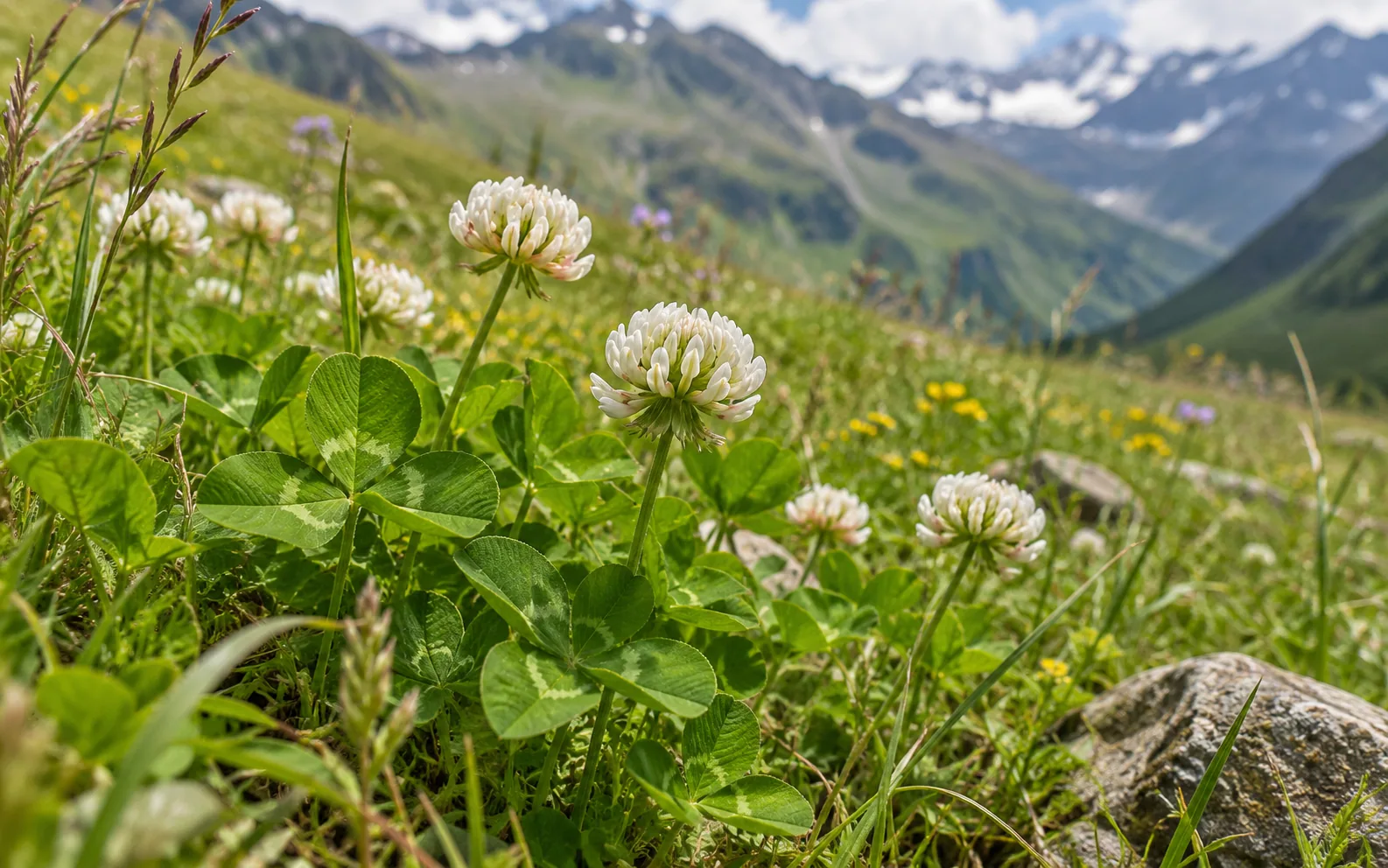
"Clover" sounds like one plant. In India's hills and plains, it's at least four.
Quick answer: Mountain clover is mostly white and red clover in hill pastures, while the plains below Kalka grow berseem and senji. Honeybees prefer white clover's small florets; nobody has tested how the honeys taste.
Our own site lists clover among the plants of Lahaul's short summer. Our Kalka posts talk about clover too. But the clovers bees find at 10,000 feet are different plants from the ones in the fields below Kalka.
 Different clovers, different places. Taste not yet tested.
The plains clovers
Below Kalka, two members of the clover family carpet the fields in the winter crop season:
- Berseem, a fodder crop, whose round white heads draw bees when it's left to flower. The grassland blooms.
- Senji, the small yellow sweet clover of field edges. The sweet clover cycle.
The mountain clovers
In the hills, the clovers of pastures and meadows are mostly white clover and red clover:
- White clover copes with cold, dry mountain grasslands. In Bhutan, it has spread through pastures from about 8,500 to 13,000 feet since it was introduced in the 1970s.
- Red clover grows in mountain pastures too, and trials in the cold, dry middle Himalaya found both clovers well adapted.
Which ones do honeybees prefer?
White clover, by a long way. Its florets are small and easy for honeybees to reach. Red clover has deeper florets, better suited to long-tongued bumblebees. Where white clover is abundant, it's one of the best honey plants in the world.
Does mountain clover honey taste different?
That's the question we were asked, and the honest answer is: nobody has tested it. No study has compared the taste of clover honey from the Himalaya with clover honey from the plains, or measured clover's share in our jars.
What we can say: different clovers, at different heights, in different seasons, feeding into different multiflora honeys. Our two jars do taste different, but that's the whole mix of flowers, not clover alone. Two places, two jars.
A myth worth clearing up
"Clover honey is always pale and mild." Often, not always. A clover-led honey from big fields abroad is usually pale. A multiflora mountain honey with some clover in it tastes of the whole meadow.
A meadow ritual
Next time you're in a hill meadow, kneel by a white clover patch on a sunny morning and count the bees in a minute. Then find a red clover and compare. You'll see the floret-size difference in action.
Common questions about mountain clover
Is white clover native to the Himalaya? It has been introduced to many Himalayan pastures as fodder. In places like Bhutan, it is now widespread.
Why do farmers like clover? It's good fodder, and like all legumes, it adds nitrogen to the soil.
Keep reading
Part of our Lahaul honey guide.
Where this comes from
- White clover introduced to Bhutan in the 1970s, spread through pastures at 2,600–4,000 m: Mountain Research and Development, 2007
- White and alsike clover best for honeybees; red clover's larger florets suit bumblebees: SARE project, Vermont
- Clover among Lahaul's plants: Not Your Beesness, Our honeys
- No source compares the taste of mountain and plains clover honey. Heights converted from metres and rounded.
Raw, unfiltered honey, bottled as it is. From the meadows of a short mountain summer.
Meet the Lahaul jar, from ₹799 for ½ kg · or see what is coming next.
Not Your Beesness, sold on āsthālaya. Delivered across India.


