
Know your honey · 3 min read
The alpine meadow magic: the short, colourful window when high meadows bloom
High meadows spend most of the year under snow. Then, for a few weeks, they turn purple, blue, yellow and pink, one wave of flowers after another. Here is the order they come in, and why the window is so short.
By Akhil Verma, Co-founder, Not Your Beesness · · Updated
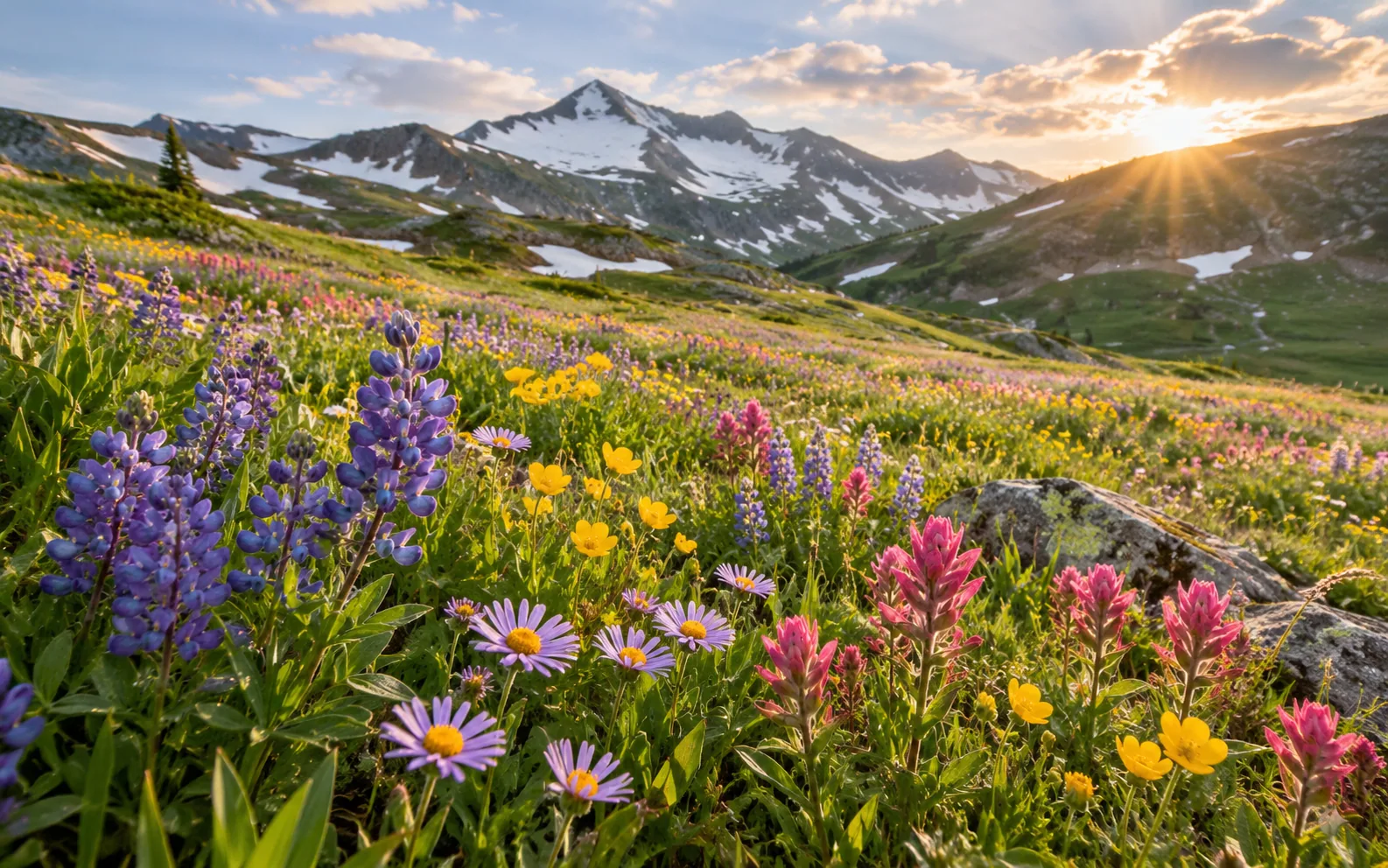
For most of the year, a high Himalayan meadow is white. For a few weeks, it is every colour at once.
Alpine meadows bloom in a hurry. The snow melts, the ground warms, and flowers that have waited months open almost together. Then the cold returns.
 First the purples and blues, then the July–August rush.
The order of bloom
A classic survey of alpine flowers in the Garhwal Himalaya described the sequence clearly:
- Right after snowmelt: early risers such as primulas (including the purple drumstick primula) and gentians, often purple and blue.
- July and August: the main show. Potentillas, louseworts (Pedicularis), knotweeds, and many daisy-family flowers.
- Late season: some plants, including gentians and buttercups, flower again before the frost.
The result, the authors wrote, is a meadow of blue, violet, red, pink, yellow and white over the season.
The higher, the shorter
A study in the Valley of Flowers found that July and August were the best flowering months, and that the growing season got shorter with height, from forest edge up to alpine meadow.
That is the challenge for high-altitude bees: a rich but brief feast. The Lahaul summer rush looks at what that means across the year.
What about Lahaul?
Lahaul's own bloom dates are not well recorded. These studies come from other parts of the western Himalaya. Lahaul is drier, so its meadows are sparser and tied closely to water. The glacial stream nectar explains why.
We also can't say the valley floors "turn purple". That depends on the place and the year. What we can say: the high-altitude bloom is short, intense and mixed, and our Lahaul jar is a multiflora honey of that season.
A myth worth clearing up
"Alpine flowers make medicinal honey." Be careful. Many alpine plants are used in traditional medicine, but that doesn't carry over to honey in any proven way. Alpine honey is a delicious food, not a remedy.
A summer ritual
If you trek in July or August, sit in a meadow for ten minutes and count the colours. Watch which flowers the bees and flies choose. You will see the season at work.
Common questions
Are all the purple flowers good for bees? Not all. Some are visited mostly by bumblebees or flies. Honeybees choose flowers they can easily reach.
Why do some flowers bloom again in autumn? Some alpine plants use a second, smaller flowering to make the most of a short season.
Keep reading
- The blue pine margins
- The wild buckwheat fields
- The glacier-fed potentilla
- The alpine clover cycle
- The alpine edelweiss myth
Part of our Lahaul honey guide.
Where this comes from
- Bloom sequence: primulas, Oxygraphis and gentians after snowmelt; Potentilla, Pedicularis, Senecio, Saussurea, Polygonum in July–August; some reflowering in October–November: Semwal & Gaur, Alpine flora of Tungnath in Garhwal Himalaya (BioStor)
- July–August best flowering months; growing season shorter at higher altitude: Phenology of alpine plants in the Valley of Flowers National Park and Hemkund, Indian Forester
- No source records Lahaul's own bloom dates. The illustration shows the general western Himalayan pattern.
Raw, unfiltered honey, bottled as it is. One short, bright mountain summer.
Meet the Lahaul jar, from ₹799 for ½ kg · or see what is coming next.
Not Your Beesness, sold on āsthālaya. Delivered across India.


