
Know your honey · 3 min read
The alpine edelweiss myth: the Himalayan edelweiss of Lahaul
Edelweiss is famous as the flower of the Alps. But a Himalayan edelweiss grows from Kashmir to Bhutan, including in Lahaul, and its famous white star isn't really a flower at all. Here's fact and fiction.
By Akhil Verma, Co-founder, Not Your Beesness ·
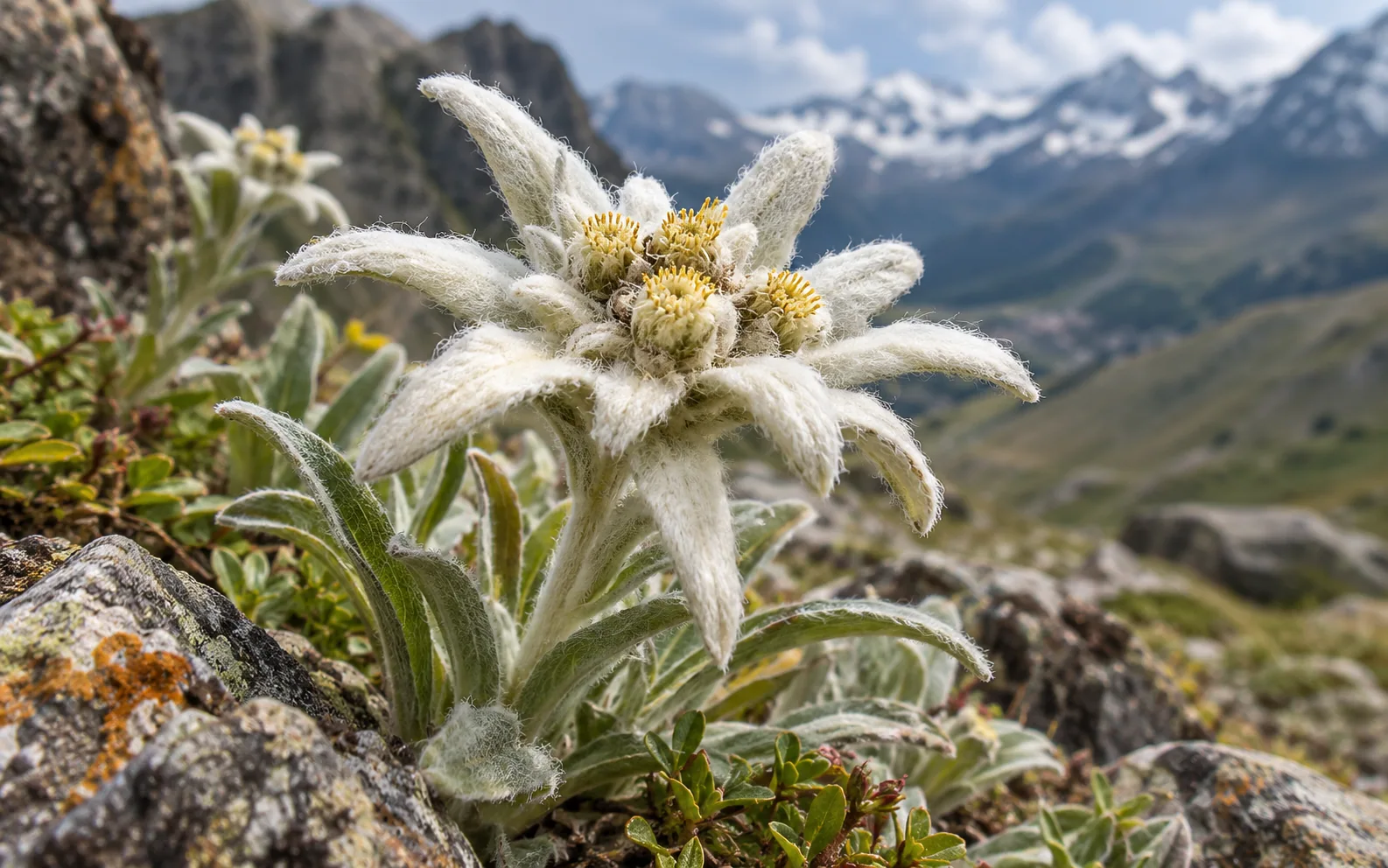
Say "edelweiss" and most people think of the Swiss Alps. Walk a high slope in Lahaul in August and you might find one there too.
Quick answer: Himalayan edelweiss grows from Kashmir to Bhutan, including Lahaul, at about 9,800–14,800 ft, flowering July to October. Its white 'petals' are woolly bracts around tiny flower heads, and no study records it as a honey flower.
Edelweiss belongs to the genus Leontopodium, "lion's paw", for its woolly look. Several species grow across Europe and Asia. The topic we were given asks us to "separate fact from fiction regarding high mountain flowers". Edelweiss is a good place to start.
 The white star is leaves; the flowers are the tiny heads inside.
Myth 1: edelweiss only grows in the Alps
Fact: a Himalayan edelweiss, Leontopodium himalayanum, grows across the Himalaya from Kashmir to Bhutan, and into Tibet and western China, at about 9,800 to 14,800 feet. It flowers from July to October, and it has been photographed in Lahaul.
Myth 2: the white star is the flower
Fact: the white, woolly "petals" are bracts: modified leaves that surround the real flowers. The actual flowers are the tiny yellowish heads clustered in the middle. The wool helps protect the plant from cold, wind and strong mountain sun.
Myth 3: it's a special honey flower
Fact: we found no study of edelweiss's role for bees, or in any honey. Its tiny flower heads, high on cold slopes, are unlikely to matter much for hive bees, which are rarely kept as high as edelweiss grows. The 11,000-foot challenge.
Other mountain-flower myths we've checked
- "Wild lavender grows in Lahaul." We found no record. The mountain lavender variant.
- "Rare flowers make rare honey." Bees need plenty of a flower for it to shape a honey. The high-pass flora.
- "Spice plants give honey a spicy note." Their aroma is usually in the seed, not the nectar. The wild caraway bloom.
A mountain ritual
If you find edelweiss on a trek, photograph it and leave it. In the Alps, it was picked so heavily that it became a protected symbol. The Himalayan species deserves the same care.
Common questions about Himalayan edelweiss
Is Himalayan edelweiss the same as Alpine edelweiss? They're different species in the same genus.
Why is edelweiss woolly? The dense hairs help protect it from cold, drying wind and intense sunlight at height.
Keep reading
- The wild buckwheat fields
- The glacier-fed potentilla
- The alpine dandelion rush
- The alpine chicory bloom
Part of our Lahaul honey guide.
Where this comes from
- Leontopodium himalayanum from Kashmir to Bhutan, Tibet and W China at 3,000–4,500 m, flowering July–October, photographed in Lahaul: Flowers of India, Himalayan Edelweiss
- Native range N Pakistan to China and N Myanmar; subalpine perennial: Kew, Plants of the World Online
- White 'petals' are bracts around the flower head: Wikipedia, Leontopodium
- No source records edelweiss's role for bees or in honey. Heights converted from metres and rounded.
Raw, unfiltered honey, bottled as it is. Facts first, from the high valleys.
Meet the Lahaul jar, from ₹799 for ½ kg · or see what is coming next.
Not Your Beesness, sold on āsthālaya. Delivered across India.


