
Know your honey · 3 min read
The lantana reality: butterfly magnet, sometime bee plant, and invader
Pink, orange and yellow, flowering almost all year, and growing everywhere in the lower hills: lantana is hard to miss. Here is the honest story of what it gives the bees, what it gives the butterflies, and what it takes from the hills.
By Akhil Verma, Co-founder, Not Your Beesness · · Updated
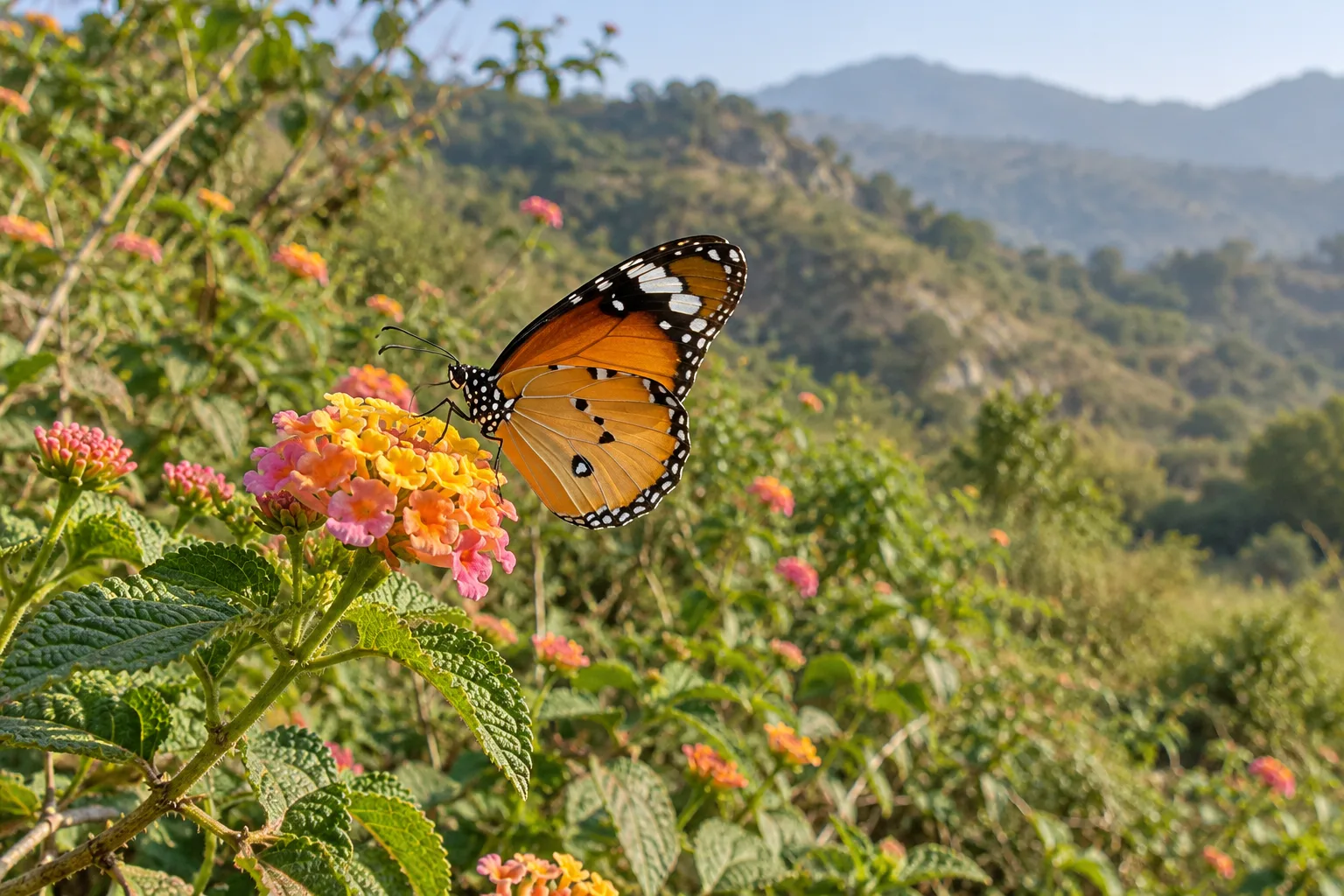
Walk any path in the lower Shivaliks and you will brush past lantana: a scrambling, scratchy shrub covered in little posies of pink, orange and yellow.
It flowers for most of the year, it survives drought and grazing, and it seems to grow everywhere. So it is natural to ask: is lantana feeding the foothill bees?
The honest answer is: a little, sometimes. Mostly, it feeds butterflies, and it costs the bees more than it gives.
 Bright and tough. A butterfly magnet first, a bee plant only sometimes.
An invader from the Americas
Lantana is not native to India. It came from the tropical Americas as a garden plant and escaped into the wild, where it now forms dense thickets across the lower hills. Where it takes over, it crowds out native shrubs.
Its real fans: butterflies
Lantana's small, tube-shaped flowers suit long tongues. A study in Assam's Raimona National Park, carried out from 2022 to 2025, recorded more than 30 butterfly species feeding on lantana between April and October, especially when other flowers were scarce.
And the bees?
Studies in other countries list honeybees among lantana's visitors. But we found no study measuring how much honeybees use it in India. So we would not call lantana a honey plant, and you will not find "lantana honey" from us.
Why it matters for the bees
The real cost of lantana is what it replaces. The native scrub of the foothills, basuti, karonda, ber, binda and dhawai, gives bees nectar and pollen across the seasons. Meet the warm brush bloom. A slope taken over by lantana is a slope with fewer of those shrubs.
What it means for your jar
Our Kalka jar is raw multiflora from the foothills. Bees take whatever they find, so the odd lantana visit is possible. But the heart of foothill honey is the native scrub, orchards and trees. See them on the bloom calendar.
A myth worth clearing up
"Anything that flowers all year must be great for bees." Not always. The shape of a flower decides who can feed on it. Lantana's narrow tubes suit butterflies better than honeybees.
A garden-season ritual
If you have a garden, plant tulsi or let a patch of native flowers bloom instead of lantana. Then reward yourself with tulsi and honey: a few crushed leaves in a spoon of honey. Tradition, not medicine. Honey is not for babies under one.
Common questions
Should lantana be removed? That is a job for foresters and local experts. The Assam researchers even suggest keeping small, managed patches for butterflies in some places.
Is lantana honey sold anywhere? We don't know of a meaningful lantana honey, and we don't make one.
Keep reading
Part of our Kalka honey guide.
Where this comes from
- More than 30 butterfly species on lantana in Raimona National Park, Assam (2022–25): EastMojo; SuperKalam summary
- Honeybees among lantana's frequent visitors (Argentina): CONICET; bees, butterflies and thrips (Thailand): ThaiScience
- Lantana's flower chemistry and pollinators in India: Springer
Raw, unfiltered honey, bottled as it is. From the native scrub of the foothills.
Find your Kalka jar, from ₹499 for ½ kg · or see what is coming next.
Not Your Beesness, sold on āsthālaya. Delivered across India.


