
Know your honey · 3 min read
The golden rod transition: Himalayan goldenrod, and the late yellow flowers of the hills
Goldenrod is one of the great late-season bee flowers of North America. A Himalayan goldenrod grows in the western Himalaya too, but far above Kalka. The lower hills' autumn gold comes from other plants.
By Akhil Verma, Co-founder, Not Your Beesness ·
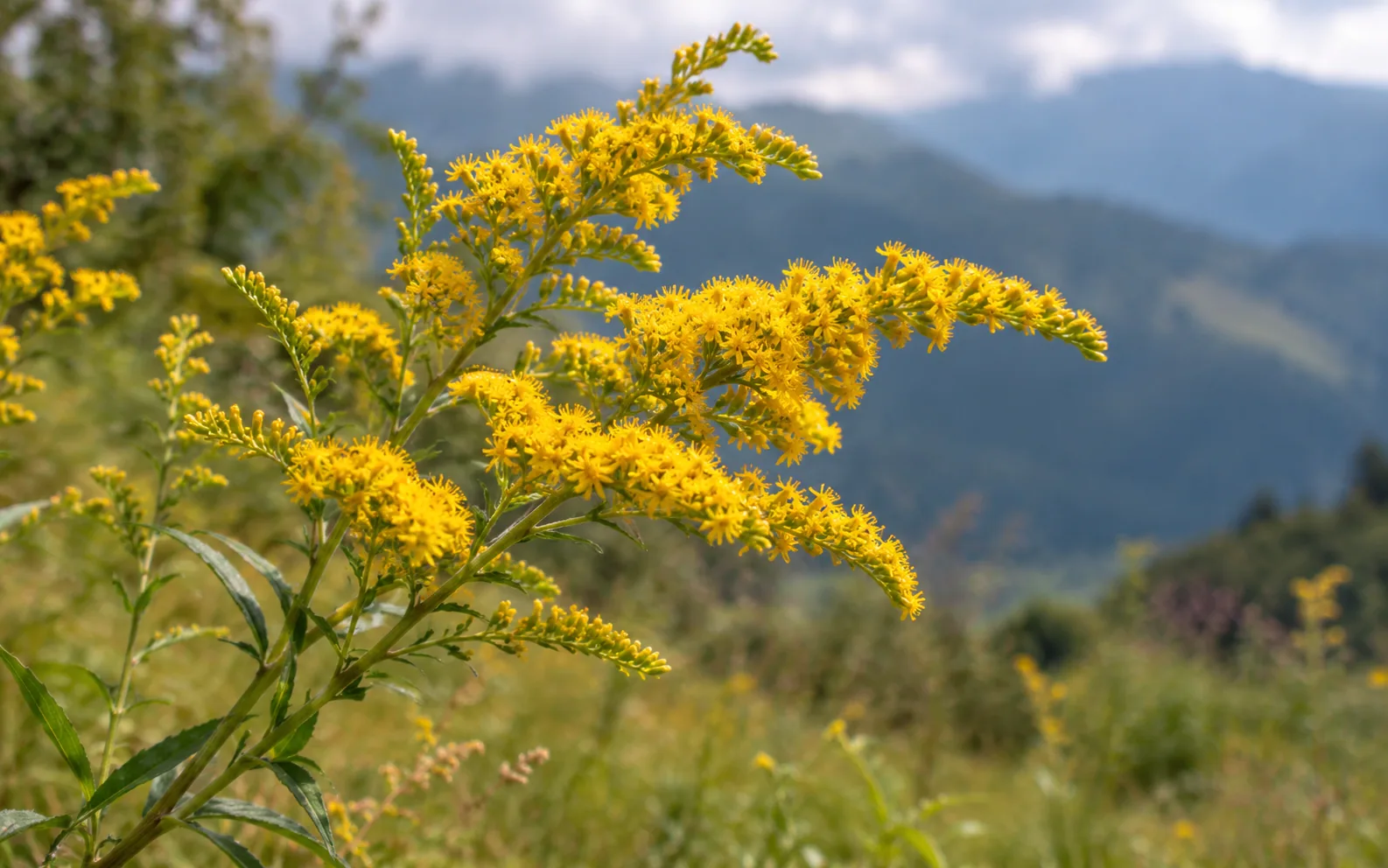
In North America, the end of summer turns roadsides gold with goldenrod, and beekeepers count on it to see their bees into winter.
Quick answer: Himalayan goldenrod grows in the western Himalaya at about 6,900–11,400 ft, flowering in late summer, far above Kalka at 2,150 ft. Abroad, goldenrods are a major autumn bee food; around Kalka, other plants fill that role.
A Himalayan goldenrod grows in India too. The topic we were given asks about "tracking late-season yellow blooms in the lower hills". Here's where Himalayan goldenrod actually grows, and why it isn't a Kalka flower.
 A late-summer yellow of the high hills, not of Kalka.
Goldenrod abroad
In North America, goldenrods are a major late-summer and autumn food for bees. Extension services describe them as important nectar and pollen sources that help colonies prepare for winter, when other flowers are scarce.
Goldenrod in the Himalaya
A goldenrod grows across the East and West Himalaya, from Pakistan through India to Nepal. Botanists argue over its name: it's been called Solidago virgaurea, but some treat the Himalayan plant as a separate species, Solidago dahurica.
Records in India place it high:
- About 6,900 feet in Chamba, Himachal.
- About 11,400 feet in the Valley of Flowers, in a meadow in early August.
Not a Kalka flower
Kalka sits at about 2,150 feet, thousands of feet below where Himalayan goldenrod grows. The lower hills' late-season flowers come from other plants: the shrubs, herbs and trees that return after the monsoon. Autumn flowers for bees. Autumn honey.
What we can't claim
We don't claim goldenrod in our Kalka jar. It doesn't grow that low, and only pollen analysis could show it anyway.
A myth worth clearing up
"Goldenrod causes hay fever." Usually not. Its pollen is heavy and carried by insects. The usual late-summer culprit abroad is ragweed, which flowers at the same time.
A hill-trip ritual
If you trek in the high meadows of Himachal or Uttarakhand in August, look for upright spikes of small yellow flowers. That may be Himalayan goldenrod. Count the insects on it.
Common questions about Himalayan goldenrod
Is there goldenrod honey? Yes, in North America, where goldenrod covers whole fields in autumn.
Why does goldenrod's name vary? Botanists disagree on whether the Himalayan plant is the same species as Europe's goldenrod.
Keep reading
- The warm brush bloom
- The wild creeper bloom
- The Indian laburnum cycle
- Golden hour in the Shivaliks
- The native bee advantage
Part of our Kalka honey guide.
Where this comes from
- Solidago virgaurea native to the East and West Himalaya: Kew, Plants of the World Online
- Himalayan populations treated as Solidago dahurica: University of Waterloo, Astereae Lab
- Records at 2,100 m in Chamba and about 11,400 ft in the Valley of Flowers in August: eFlora of India
- Goldenrod as a late-season nectar and pollen source for bees: American Bee Journal, September 2024; NDSU Extension; USDA plant guide
- Heights converted from metres and rounded.
Raw, unfiltered honey, bottled as it is. From the flowers that really grow in the foothills.
Find your Kalka jar, from ₹499 for ½ kg · or see what is coming next.
Not Your Beesness, sold on āsthālaya. Delivered across India.


