
Know your honey · 3 min read
The wild mustard drift: when mustard really blooms, and how to tell it's in a honey
Mustard is a winter flower on the North Indian plains, not a late-season one. And the only way to know how much of it is in a jar is to look at the honey's pollen under a microscope.
By Akhil Verma, Co-founder, Not Your Beesness · · Updated
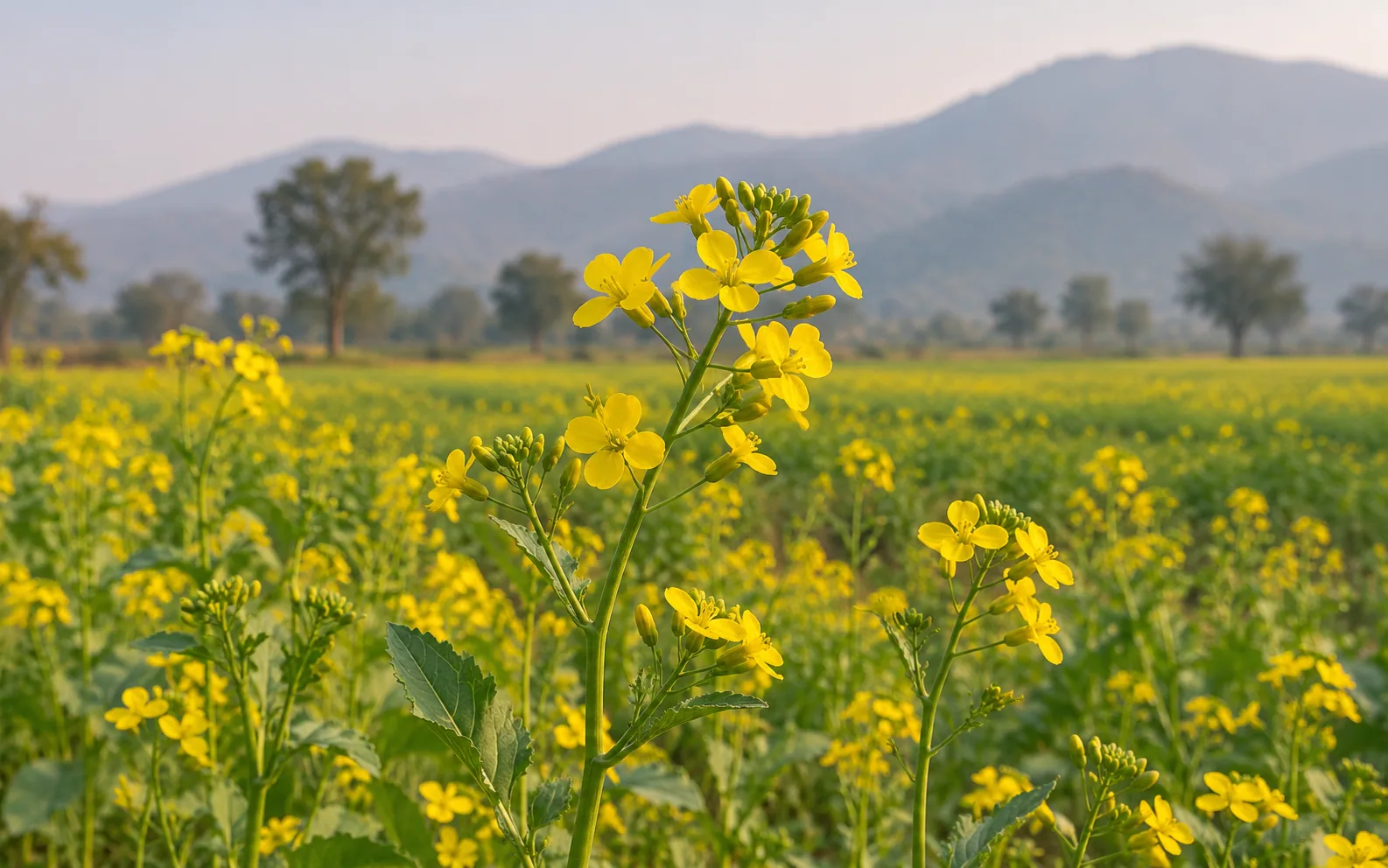
Drive through Punjab in January and the fields glow yellow. That is mustard in full bloom, and the bees know it.
Mustard is one of the biggest winter honey flows in North India. That timing matters, because the idea of mustard "drifting" into late-season foothill honey gets the calendar the wrong way round.
 Mustard is a winter flower. Pollen tells you how much is in a jar.
When mustard blooms
On the North Indian plains, mustard is sown after the monsoon and flowers through the cold months, roughly December to February, depending on the sowing date and the year. That is why many beekeepers, including some from as far as Kashmir, bring their boxes down to the mustard fields of Punjab and Rajasthan for winter.
So mustard is early-year forage, not late-season. By the time autumn honey is made in the foothills, the mustard fields are only just being sown.
How to tell if mustard is in a honey
Taste alone can't tell you. The reliable way is pollen analysis, also called melissopalynology:
- Take a drop of honey. Every honey carries pollen from the flowers the bees worked.
- Look under a microscope. A lab separates the pollen and identifies each grain by its shape.
- Count the grains. The share of each plant's pollen shows which flowers led the honey.
The 45% rule
Under FSSAI rules, a honey can be named after one flower, such as "mustard honey", only if that plant makes up at least 45% of its pollen. Below that, it is multiflora.
Our Kalka jar is multiflora: honey from many flowers, with none named on the label.
What mustard honey is like
Mustard-led honey is usually light in colour and known for setting fast, sometimes within weeks, into a creamy, pale solid. That is natural. Here is why honey sets.
A myth worth clearing up
"Honey that sets quickly has sugar added." No. Mustard honey is famous for setting fast, because of its natural sugar balance. Quick setting is a trait, not a trick.
A winter ritual
Mustard honey and sarson ka saag share a season. On a cold January evening, a spoon of honey in warm (not boiling) water with a squeeze of lemon is an old winter comfort. Honey is not for babies under one.
Common questions
Does your Kalka honey contain mustard? It may hold some, as the plains below the hills grow mustard. Only pollen analysis could say how much, and we don't make a claim.
Can I buy pure mustard honey from you? Not at the moment. See what is coming next.
Keep reading
Part of our real honey guide.
Where this comes from
- Mustard as main winter forage and migratory beekeeping in Punjab: Status and prospects of migratory beekeeping in Punjab (KrishiKosh)
- Kashmir beekeepers moving to the plains for mustard in winter: Mongabay India
- FSSAI rule for single-flower names (at least 45% of the pollen): Food Safety and Standards (Food Products Standards and Food Additives) Regulations, Reg 2.8.3
- Mustard honey sets fast: Indian exporter listing
- Bloom months in the illustration are indicative for the North Indian plains.
Raw, unfiltered honey, bottled as it is. Many flowers, no borrowed names.
Find your Kalka jar, from ₹499 for ½ kg · or see what is coming next.
Not Your Beesness, sold on āsthālaya. Delivered across India.


