
Know your honey · 4 min read
My honey has set. Is it spoiled?
It has not gone bad, and it has not been faked. Raw honey sets as it ages. Here is why, and how to make it runny again.
By Akhil Verma, Co-founder, Not Your Beesness · · Updated
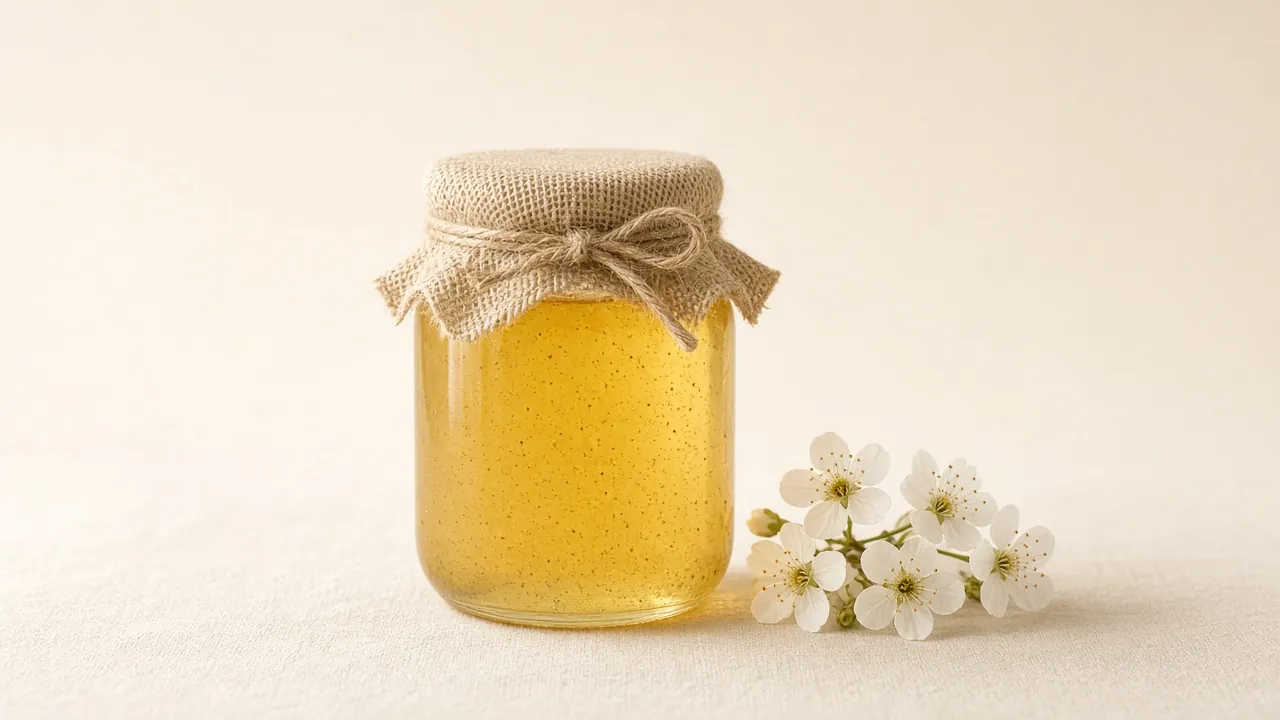
On a cold morning, the honey that poured like silk last month can look like ghee: pale, grainy, firm enough to hold a spoon upright. The first worry is that it has gone bad. The second is that it was never real honey. Neither is true.
Why honey sets
Honey is mostly two sugars, fructose and glucose, with very little water. There is more sugar in it than that water can comfortably hold, and glucose is the less soluble of the two. Given time, glucose comes out of the liquid as tiny crystals, and the crystals spread until the whole jar has set.
Three things decide how fast it happens:
- The flowers. Honey with more glucose sets sooner. Mustard honey, common in North India, is known for setting fast. Others stay runny for months.
- The cold. Honey crystallises fastest at around 10 to 15°C, the temperature of a North Indian winter kitchen. The fridge speeds it up too.
- What is in it. Raw honey keeps its pollen and tiny specks of wax. Crystals grow around them, so unfiltered honey usually sets sooner than finely filtered honey.
What it does not mean
Set honey has not spoiled. It tastes the same, and you can eat it as it is. Spread it on warm toast and it melts as it goes.
Nor is it a purity test, in either direction. Crystallisation is natural, so it does not mean sugar was added. And honey that stays runny is not automatically fake: the flowers it came from, and any heating along the way, change how fast a honey sets.
How to make it runny again
Gentle warmth turns the crystals back into liquid. What it needs is patience, not heat.
Make a warm bath
Fill a bowl or a deep pan with warm water, around 40 to 45°C: about as warm as a hot bath, comfortable to hold your hand in. Not boiling, and not on the stove.
Stand the jar in it
Loosen the lid and stand the jar in the water, so the water comes up to the level of the honey.
Stir and wait
Stir every few minutes with a clean, dry spoon, and top up with warm water as it cools. A full jar can take half an hour or more.
Dry it and close it
Wipe the jar dry before it goes back on the shelf, and close the lid tightly.
How to slow it down
- Keep the jar at room temperature, in a cupboard away from the stove, not in the fridge.
- Close the lid tightly after every use.
- Use a clean, dry spoon. Water in the jar does honey no favours: here is why.
Or do not slow it down at all. Plenty of people prefer their honey set. It spreads like butter and stays on the toast.
Keep reading
Can I eat it while it is set?
Yes. It is the same honey with a different texture. Spread it, or stir it into warm milk or chai.
Can I warm the same jar again and again?
Gently, yes. Each long, hot session costs a little flavour, so if you only need a little, warm a spoonful in a small cup instead of the whole jar.


