
Know your honey · 3 min read
Why is there foam on top of my honey?
A pale layer on top, white streaks down the glass: in raw honey they are usually just air. Here is how to tell them from honey that has gone off.
By Akhil Verma, Co-founder, Not Your Beesness · · Updated
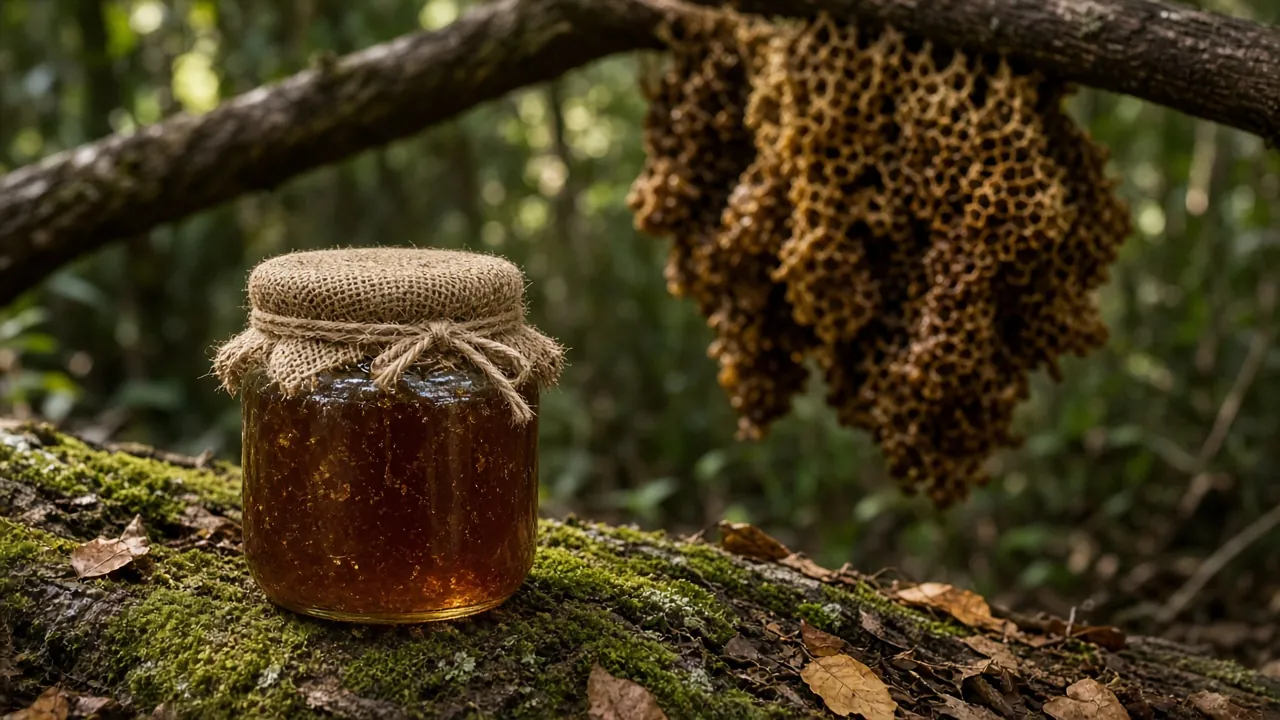
Raw honey is not polished. Ours is strained once, coarsely, and bottled as it is, so it carries a few things that filtered honey does not: tiny air bubbles, pollen and specks of wax. Most of what looks odd in a jar of raw honey comes from those.
The foam on top
Honey is thick, so the air bubbles from bottling rise slowly. Over days and weeks they reach the top and gather there with the lightest specks of wax and pollen, as a pale, creamy layer. It is honey with air in it. Stir it back in, or spread it on toast; it tastes the same.
White streaks on the glass
Sometimes white lines or a frosty patch appear on the inside of the jar, often near the shoulder. That is air trapped between the honey and the glass, and it tends to show as the honey sets. Beekeepers call it frosting. It changes how the jar looks, not the flavour or the quality.
White specks and a cloudy look
Pale specks scattered through the honey are usually the first crystals, or tiny bits of wax and pollen. To tell which, warm the jar gently in warm water, the way we describe here: crystals melt away, and wax floats to the top.
Keep reading
Should I skim the foam off?
No need. It is honey and air, with a little wax and pollen. Stir it in, or eat it as it is.
Why does supermarket honey not do this?
Most commercial honey is finely filtered, which takes out the pollen and wax, and is often warmed before bottling, which helps the air escape. That makes a clearer jar. We stop at one coarse strain, so ours keeps its pollen and wax, and sometimes a little foam.


