
Know your honey · 4 min read
The great drying: how bees fan their wings to cure honey
Nectar is mostly water. Honey is mostly not. In between, thousands of bees spread, fan and seal, turning a watery drink into a food that keeps for years. Here is how they do it.
By Akhil Verma, Co-founder, Not Your Beesness · · Updated
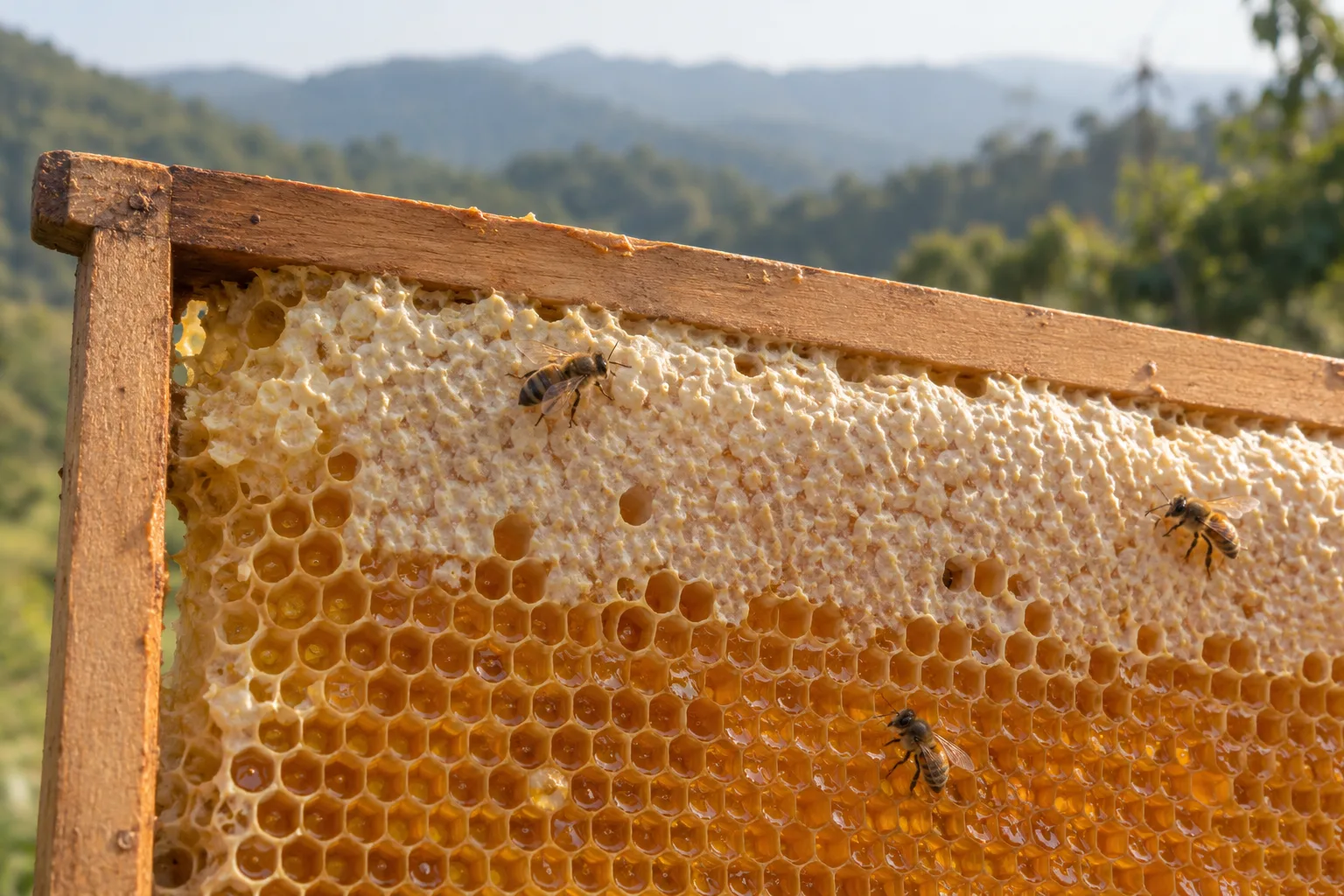
Stand near a busy hive on a warm evening and you will hear it: a steady hum, even after the foragers are home. That is the sound of honey being made.
Inside, hundreds of bees are fanning their wings to drive air through the hive. They are drying the day's nectar, drop by drop, into honey.
 From about three-quarters water to under a fifth: the bees' great drying.
Nectar is mostly water
Fresh nectar is a thin, sweet drink, often about three-quarters water. The exact amount varies by flower and weather, from roughly 70% to over 80%.
Left like that, it would ferment within days. Yeasts love sugar water.
Three steps to ripe honey
1. Spread it thin. Bees spread the nectar in thin films and small droplets across the cells of the comb. More surface means faster drying.
2. Fan it dry. Bees line up and fan their wings, driving warm air through the hive and carrying the moisture out. It can take hours or days.
3. Seal it. When the honey is ripe, at roughly 15.5 to 18.5% water, the bees cap each cell with a thin lid of wax. Now it keeps.
Along the way, the bees also add their own enzymes, which help turn the nectar's sugars into honey.
Why "under a fifth" matters
Below about a fifth water, the yeasts that cause fermentation cannot get going. That is why ripe, sealed honey keeps for so long. It is also why India's food standard sets a maximum of 20% moisture for honey.
And it is why a wet spoon is honey's enemy: a few drops of water can undo the bees' work at the surface. How to store honey.
And in a Kalka summer?
The bees dry honey the same way all year. In the heat of May and June, though, they have less nectar to dry, and much of their effort goes into cooling the hive with water instead. What a heatwave does to bees. In the humid monsoon, drying is harder work. The monsoon wash.
What it means for your jar
Thick, ripe honey is the bees' work, not ours. We don't heat honey to drive off water or make it pour. Our Kalka jar is one coarse strain and bottled raw. What makes honey thick.
A myth worth clearing up
"Bees add water to honey." The opposite. Bees spend enormous effort taking water out.
A small ritual
Next time you open a jar, smell it before you spoon. That aroma survived all that drying because nobody cooked it. Honey is not for babies under one.
Common questions
What happens if honey is taken before it is sealed? It can be too wet and may ferment. Careful beekeepers wait for the bees' wax caps. The first harvest.
Does honey keep forever? Ripe honey kept dry and sealed keeps for a very long time. Water and heat are what spoil it.
Keep reading
Part of our guide to how bees make honey.
Where this comes from
- Ripe honey at 15.5–18.5% water, reached by fanning over hours or days: University of Florida, American Bee Journal field guide
- Nectar spread in droplets and thin films; fanning; low moisture stops yeast: University of Arkansas Extension; Discover Wildlife
- FSSAI moisture limit of 20%: Food Safety and Standards (Food Products Standards and Food Additives) Regulations, Reg 2.8.3
- Figures in the illustration are approximate.
Raw, unfiltered honey, bottled as it is. Dried by the bees, not by the stove.
Find your Kalka jar, from ₹499 for ½ kg · or see what is coming next.
Not Your Beesness, sold on āsthālaya. Delivered across India.


