
Know your honey · 3 min read
The rainwater barrier: why bees seal honey under wax
When honey is ripe, bees seal each cell with a thin lid of wax. That lid doesn't keep out rain; the hive does that. It keeps out the moist air that would undo the bees' work.
By Akhil Verma, Co-founder, Not Your Beesness ·
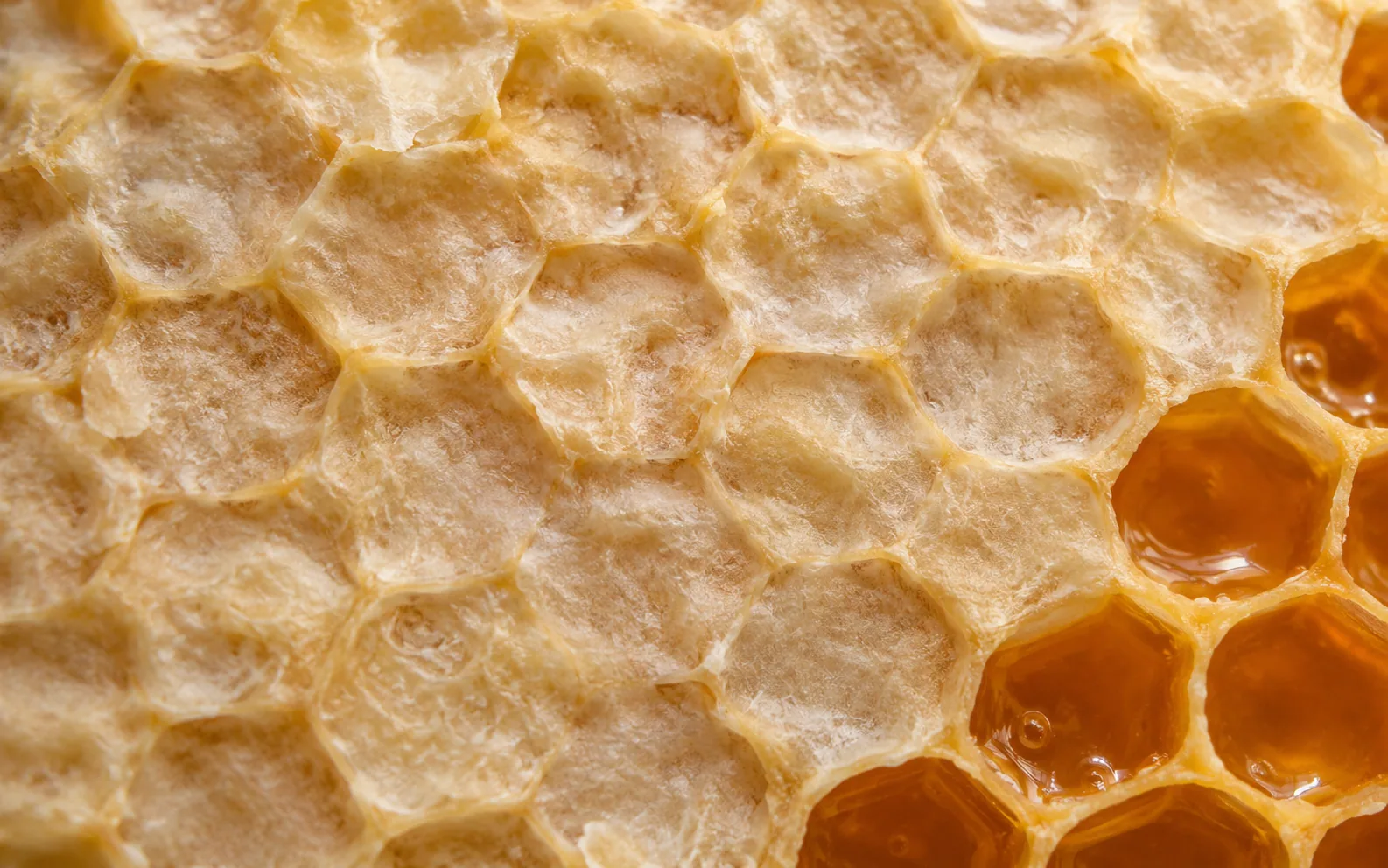
A frame of ripe honey looks like it's been iced: every cell sealed under a pale lid of wax.
Quick answer: Capped honey is ripe honey, dried to about 18% water, that bees have sealed under wax. The cap keeps moist air out, since honey absorbs water and can ferment. Beekeepers harvest mostly capped comb, though caps aren't a guarantee.
That lid is a capping. Bees add it when the honey inside is ready. To see why, you need to know one thing about honey: it pulls water out of the air.
 From open nectar to a sealed cell.
Why honey needs a lid
- Nectar is mostly water, often over 70%. Bees spread it out and fan their wings over it until it's down to about 18%. How bees dry honey.
- Ripe honey is hygroscopic: left open, it absorbs moisture from humid air, and wet honey can ferment.
- So bees seal ripe cells with wax. The cap keeps moist air out, along with dust and pests.
What about rain?
The topic we were given calls cappings a "rainwater barrier". Rain shouldn't reach the comb at all: that's the job of the hive and its roof. The cap's enemy isn't rain; it's humid air inside the hive, which is why capping can be slower in the monsoon. The monsoon wash.
Why beekeepers wait for it
Capped comb is a sign the honey is ripe, so beekeepers harvest mostly sealed frames. The first honey harvest.
But it's a sign, not a guarantee. In a heavy flow or a damp hive, bees sometimes cap early. That's why careful beekeepers also check moisture with a refractometer. India's food rules set a limit of 20% water for honey.
A myth worth clearing up
"Honey with bits of wax in it is dirty." No. Tiny flecks of wax are a normal sign of raw, lightly strained honey.
A kitchen ritual
Always close your honey jar tightly, especially in the monsoon. You're doing the bees' job: keeping the air out.
Common questions about capped honey
Can you eat the wax caps? Yes. Comb honey is eaten wax and all.
Why did my honey get runny and sour? Probably moisture got in. Keep jars sealed and spoons dry. How to store honey.
Keep reading
Part of our guide to how bees make honey.
Where this comes from
- Bees capping ripe honey; uncapped honey taking back moisture from the air: University of Arkansas Extension
- Capping around 18.5–18.6% water, early capping, checking with a refractometer: American Bee Journal, Dealing with uncapped honey; PerfectBee
- FSSAI moisture limit of 20%: Food Safety and Standards (Food Products Standards and Food Additives) Regulations, Reg 2.8.3
- Figures in the illustration are approximate.
Raw, unfiltered honey, bottled as it is. Sealed by the bees first, then by us.
Find your jar: Lahaul from ₹799 or Kalka from ₹499, for ½ kg · or see what is coming next.
Not Your Beesness, sold on āsthālaya. Delivered across India.


