
Know your honey · 5 min read
How Bees Make Honey: Seasons, Hives and Beekeepers
Behind every jar is a hive working to the rhythm of the weather and the flowers. This guide gathers everything we've written about how bees and beekeepers work.
By Akhil Verma, Co-founder, Not Your Beesness · · Updated
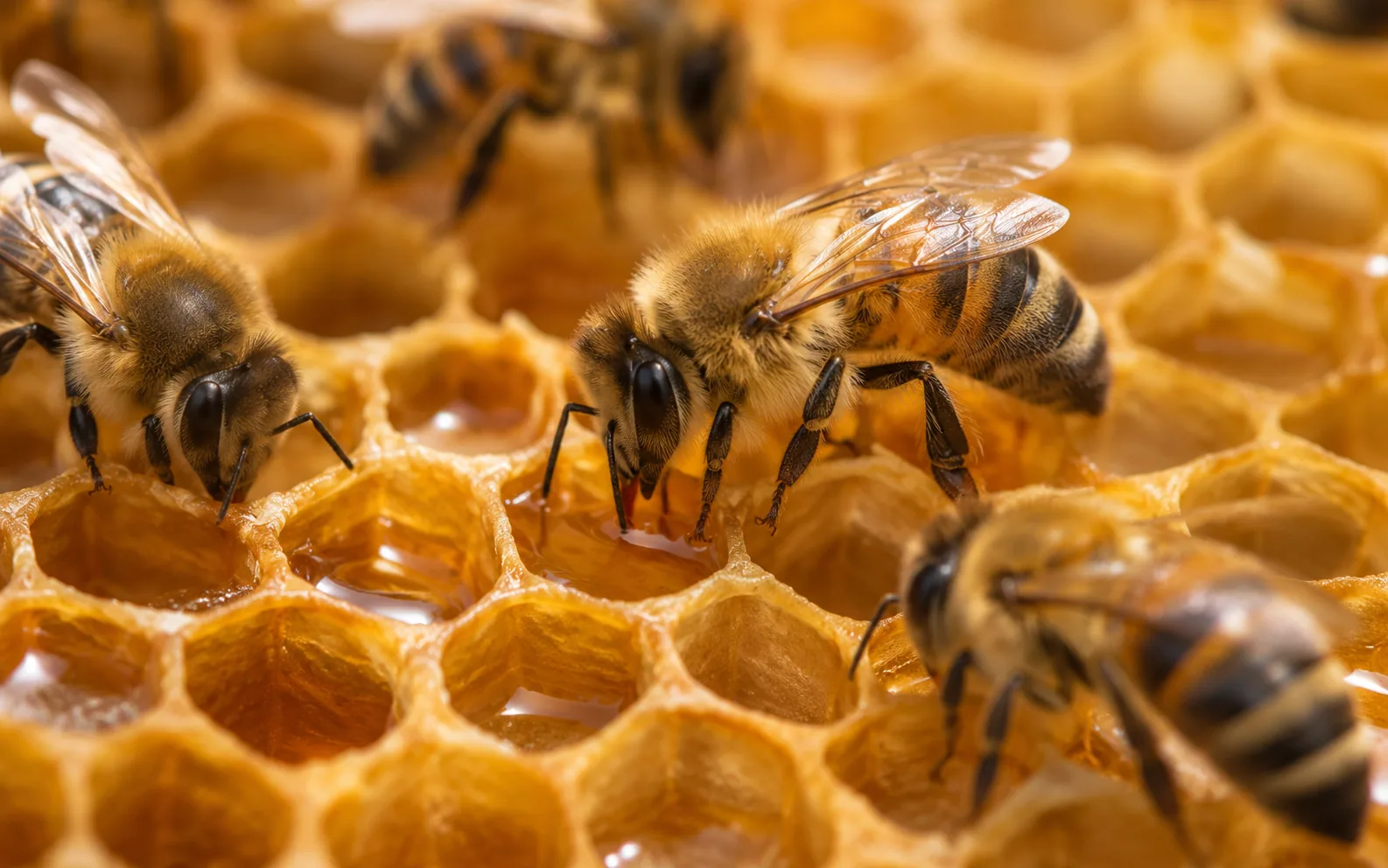
A spoon of honey is the work of thousands of bees over many days.
Quick answer: Here's how bees make honey: they collect nectar, add enzymes, dry it in the comb by fanning their wings, and seal each ripe cell with wax. Their working day and year follow warmth, light, weather and flowers.
Read in any order. Together these posts follow the bee from sunrise to winter, and the beekeeper from apiary to the open road.
The bee's day
- The morning mist effect: how Shivalik humidity changes the nectar
Mist in the Kalka foothills does more than soften the view. Nectar trades water with the air, so mist dilutes it and shifts when bees forage. - The gentle slopes: what really decides how long bees can work in the foothills
Do foothill bees work longer days? What really sets a bee's working day: warmth, light and distance, and where slopes come in. - The Shivalik sunrise: how morning light and the bees' inner clock start the day
Sunrise looks like it wakes the bees, but they were expecting it. How light, warmth and an inner clock start a foothill hive's working day. - The foothill wind currents: what mountain breezes really do to honeybees
Breezes don't steer bees to flowers. Foraging efficiency falls as wind rises and stops around 24 km/h. What that means for foothill bees. - The solar lifecycle: does daylight decide a hive's year?
Kalka and Keylong get almost the same daylight, within about eight minutes, yet their bee seasons are months apart. What day length does for a hive.
The bee's year
- The monsoon wash: how the rains change what the foothills offer bees
For foothill bees, the monsoon is the leanest stretch of the year. What the rains do to flowers and foraging, and why good honey isn't taken then. - Kalka's May heatwave: what rising temperatures really do to bees and honey
Does a hot May make honey thicker and sweeter? No. In a heatwave, flowers give less nectar and bees switch to cooling the hive. - The foothill beekeeping year: a season-by-season calendar
A typical North Indian foothill beekeeping year: the February–April flow, summer heat, the monsoon gap, autumn, and the quiet cold months. - The pre-monsoon rush: build-up, peak and swarm season in the foothill hives
Between spring flowers and summer heat, foothill hives grow fast, peak in April and may split in two. What swarm season looks like inside the hive. - The winter slowdown: how a mild foothill winter changes the hive
Bees don't hibernate. In winter they cluster around the queen to keep warm, and in the mild Kalka foothills they still fly on sunny afternoons. - The first flight: how bees come out of winter
A colony's first trip out after winter is a cleansing flight. What temperature wakes bees, why there's no fixed date, and how Kalka and Lahaul differ. - The clean-up phase: how beekeepers prepare hives for winter
How beekeepers ready colonies for winter: leave enough honey, unite weak colonies, shrink the entrance, or in Himachal's high hills, move to the plains. - The altitude gradient: how height sets the honey calendar
Flowering comes about 4 days later for every 400 ft of height, says Hopkins' rule. How that plays out from Kalka's spring to Lahaul's short summer. - The unpredictable year: what a changing climate means for Himalayan honey
Some Himachal beekeepers report seasons shifting 10–15 days, others none. What the evidence says about climate change, bees and honey in the hills.
Inside the hive
- The great drying: how bees fan their wings to cure honey
Nectar is about three-quarters water; honey is under a fifth. How bees spread, fan and seal nectar into a honey that keeps for years. - The foothill apiary: how beekeepers set up hives in the Shivalik woods
Shade, a stand, the entrance direction, water and distance from spraying: how beekeepers typically set up hives in the Shivalik foothills, and why. - The stone wall apiaries: wall hives and windbreaks in the hills
Hill families once built beehives into the thick stone-and-timber walls of their homes. How wall hives work, where they survive, and stone windbreaks. - The rainwater barrier: why bees seal honey under wax
Bees seal ripe honey under wax caps to keep moist air out, not rain. Why capped honey matters at harvest, and why a cap isn't a guarantee.
Beekeepers
- The local apiary journals: who keeps India's bees, and how
Most Indian honey comes from small family beekeepers, many of them migratory. Registration counts from Madhukranti, the national honey traceability portal. - The nomadic keepers: the beekeepers who move their hives across the mountains
Many Himachal beekeepers keep bees in the hills from April to October and winter them on the plains. The costs, border stops and weather risks. - The beekeeping heritage: from wall hives to wooden boxes in the Himachal hills
From hives built into house walls to wooden boxes on trucks: the beekeeping history of the Himachal hills, and what we still don't know about Lahaul. - The native bee advantage: Apis cerana, the Himalayan honeybee
Apis cerana, India's native hive bee, makes less honey than the Italian bee but resists Varroa mites and copes with Himalayan cold. The honest comparison.
Common questions about how bees make honey
How far do bees fly for nectar? Usually within about 2 miles of the hive, sometimes much further when flowers are scarce.
Do bees work all year? No. The monsoon is lean, and in winter they cluster to keep warm, flying only on mild days.
Why do beekeepers move their hives? To follow the flowers through the seasons. Migratory beekeeping in Himachal.
More guides
Raw, unfiltered honey, bottled as it is.
Find your jar: Lahaul from ₹799 or Kalka from ₹499, for ½ kg · or see what is coming next.
Not Your Beesness, sold on āsthālaya. Delivered across India.


