
Know your honey · 3 min read
The local apiary journals: who keeps India's bees, and how
Behind every jar of Indian honey is a beekeeper, and most of them are small family operations. Here is a picture of who keeps bees in India, how they work, and how honey is now traced back to them.
By Akhil Verma, Co-founder, Not Your Beesness · · Updated
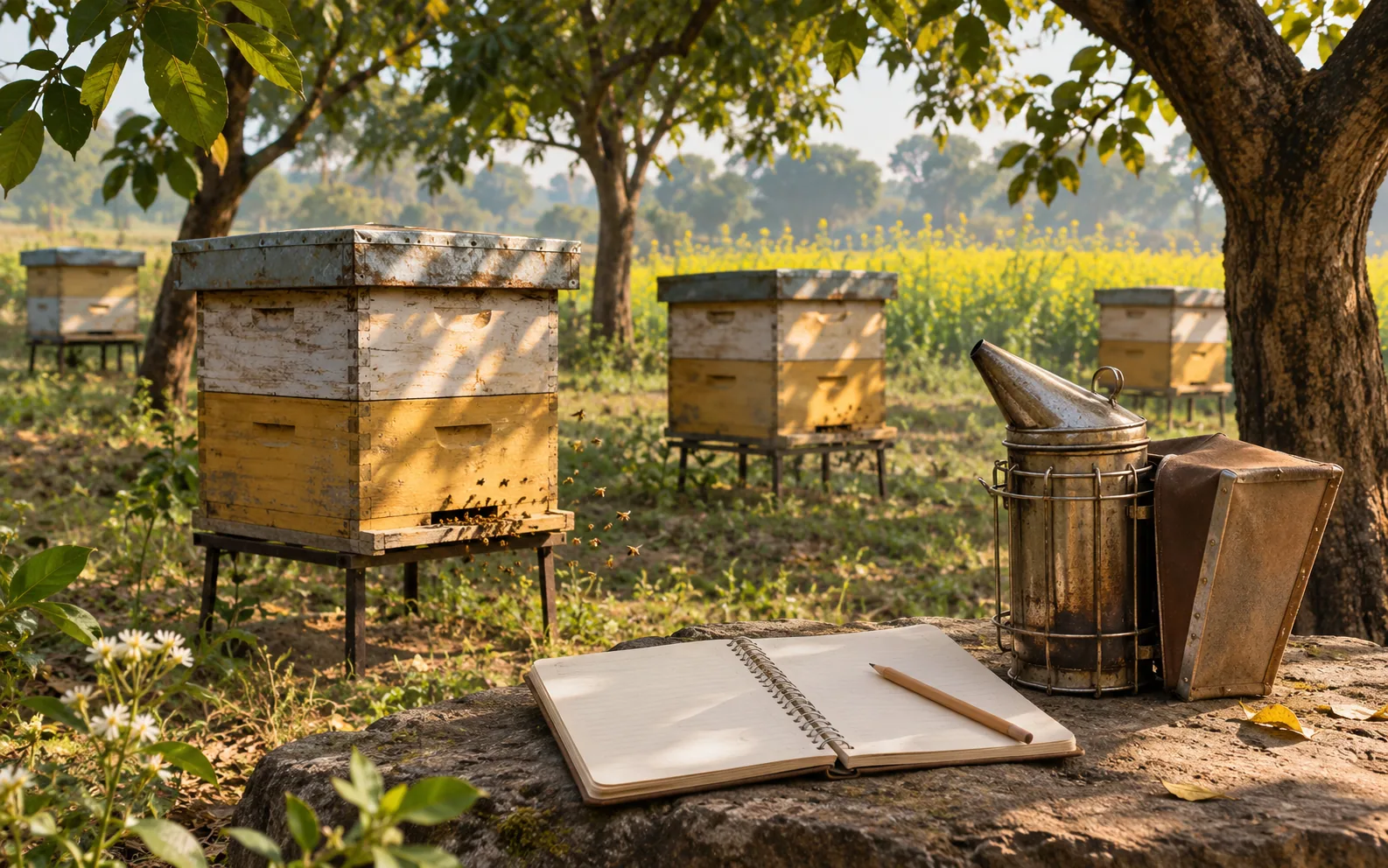
Most of India's honey is not made by big companies. It is made by families who keep a few dozen to a few hundred boxes, often alongside a farm.
This post is a general picture of who those beekeepers are and how they work. It is not a profile of particular families: those stories are theirs to tell, and we would rather share them in their own words than imagine them.
 Mostly small family beekeepers, with societies and firms alongside.
Who is registered
India now has a national honey traceability portal, Madhukranti, set up under the National Beekeeping and Honey Mission. Beekeepers, societies and businesses register on it so honey can be traced back to its source. Published summaries of the portal list roughly:
- 14,859 beekeepers
- 269 beekeeping societies
- 150 firms
- 206 companies
These counts come from secondary summaries, not the portal itself, and they change as more people register. The shape is the point: individual beekeepers far outnumber everyone else.
Small family apiaries
The typical Indian beekeeper is a small operator. Beekeeping often sits beside farming: bees pollinate the crops, and the honey adds income. Many learned the work from a parent, an uncle or a local training camp.
Following the flowers
Many beekeepers in the north are migratory. They move their boxes with the seasons: to the hills for summer flowers, and down to the mustard fields of Punjab and Rajasthan for winter. It is hard, careful work, often done at night when the bees are home. The foothill beekeeping year shows the general rhythm.
The European bee
Most commercial hives in the north now hold the European honeybee, Apis mellifera. It was first brought to India in 1962, at Nagrota Bagwan in Himachal Pradesh. Our native hive bee, Apis cerana, is still kept too, especially in the hills. How a foothill apiary sits covers the boxes themselves.
A myth worth clearing up
"Honey from a big brand is more reliable than honey from a small beekeeper." Not by size alone. What matters is how the honey is handled and whether it meets the food standards. A small beekeeper's raw honey can be excellent. A big brand's can be heavily processed.
A family ritual
Next time you buy honey at a fair or a roadside stall, ask the seller one question: where were your boxes this season? A beekeeper who moves with the flowers will light up and tell you.
Common questions
What is Madhukranti for? It is meant to trace honey back to the beekeeper and the region, so buyers can trust where it came from.
Are Indian beekeepers mostly men? Many are, but women run and work in apiaries across the country, often through self-help groups and societies.
Keep reading
Part of our guide to how bees make honey.
Where this comes from
- Madhukranti registration counts (secondary summary) and the National Beekeeping and Honey Mission: Lukmaan IAS, National Beekeeping and Honey Mission
- Migratory beekeepers following the flowers: WTOP / AP, India's migratory beekeepers; Kashmir beekeepers moving to the plains for mustard: Mongabay India
- Apis mellifera first introduced at Nagrota Bagwan in 1962: Beekeeping presentation, SlideShare
- The counts are approximate and change over time. Check the portal for current figures.
Raw, unfiltered honey, bottled as it is. From beekeepers who follow the flowers.
Find your Kalka jar, from ₹499 for ½ kg · or see what is coming next.
Not Your Beesness, sold on āsthālaya. Delivered across India.


