
Know your honey · 3 min read
The winter slowdown: how a mild foothill winter changes the hive
Bees don't hibernate. When it turns cold, they huddle into a living ball and keep each other warm. In the mild winter of the Kalka foothills, they can still slip out on sunny afternoons.
By Akhil Verma, Co-founder, Not Your Beesness · · Updated
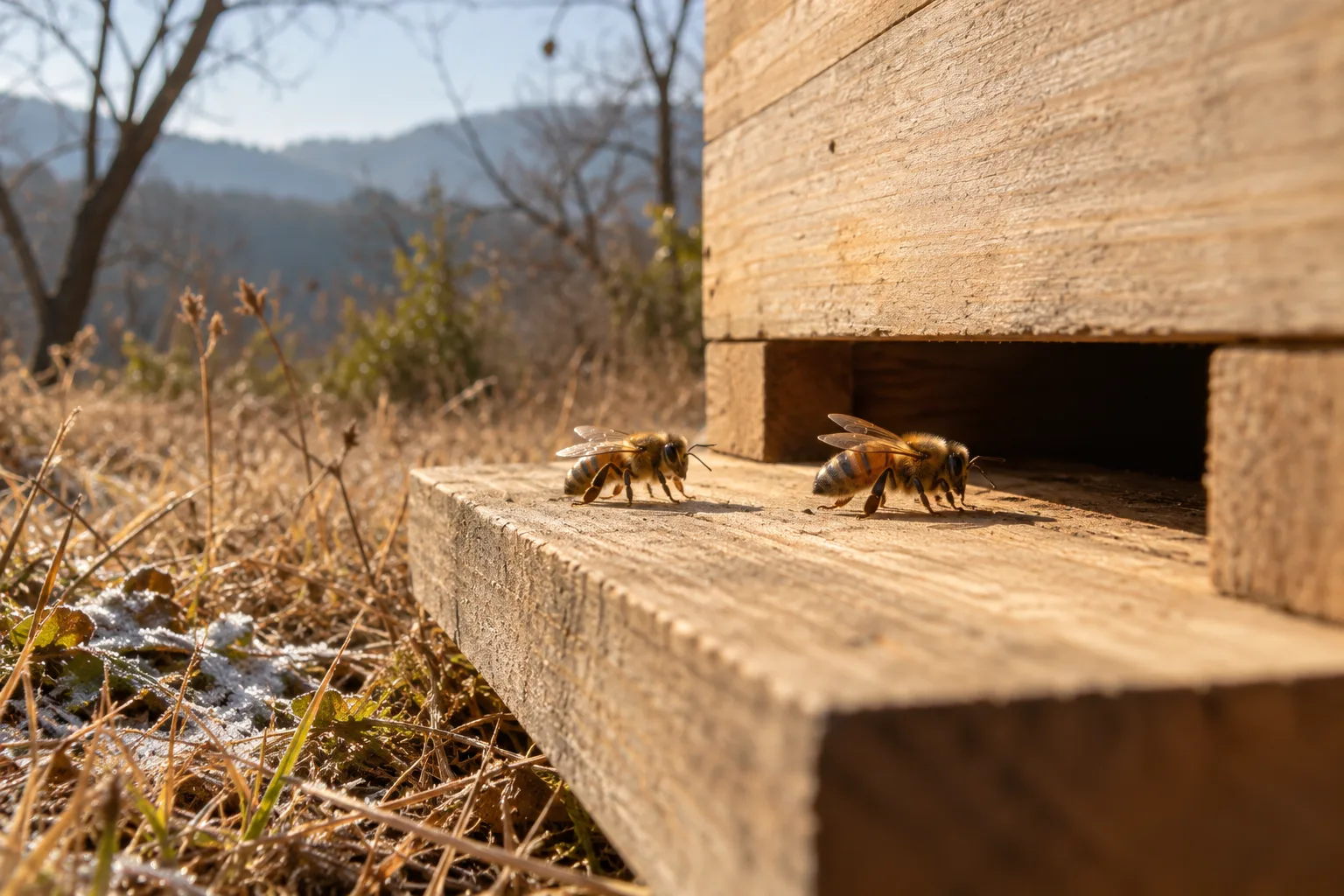
On a cold January night in the foothills, a hive is silent from the outside. Inside, thousands of bees are huddled into a ball, quietly shivering to keep each other warm.
Honeybees don't hibernate. They have a cleverer plan.
 A living ball of bees, and sunny-day flights when the foothill winter allows.
The winter cluster
When the air turns cold, the colony gathers into a tight cluster around the queen.
- Inner bees shiver their flight muscles without moving their wings, making heat.
- Outer bees stay still, packed tight like a woolly blanket.
- They swap places, so no bee stays on the cold outside for too long.
The cluster eats its stored honey for fuel. That is why the honey the bees put away in spring and autumn matters so much.
The queen slows down
In the coldest weeks, the queen lays far fewer eggs. As the days lengthen, often by late winter, she picks up again, so the colony is ready to grow when the spring flow arrives.
A mild foothill winter
The Kalka foothills have cold nights but mild, sunny days. In climates like this, bees often break cluster on warm afternoons to fly, stretch and relieve themselves outside the hive, and to visit the first winter flowers, such as binda and the mustard fields below the hills. In very warm places, bees may hardly cluster at all.
Exact temperatures for when bees cluster or fly vary between sources, so we haven't printed them here.
What it means for your jar
Winter is when you see honey change: it often sets in the cold, turning pale and firm like ghee. That is natural, not a fault. Why honey sets. Our Kalka jar comes back to a smooth pour with a gentle warm-water bath.
A myth worth clearing up
"Bees sleep through winter." No. A winter colony is awake and working, just very quietly, turning honey into warmth.
A winter ritual
The classic: adrak aur shahad for a winter throat, or a spoon of honey in warm haldi doodh, stirred in once it has cooled from scalding. Tradition, not medicine. (Why not boiling.) Honey is not for babies under one.
Common questions
Do beekeepers open hives in winter? As little as possible, and only on warm days, so they don't chill the cluster.
Why do some beekeepers move hives to the plains in winter? For the mustard fields, which give winter forage. The beekeeping year.
Keep reading
Part of our guide to how bees make honey.
Where this comes from
- Winter cluster, inner bees shivering and outer bees insulating, queen at the centre: PerfectBee; BeePods
- Queen lays less in the coldest months and resumes as days lengthen; cleansing flights on warm days; little or no clustering in subtropical climates: Garden.org; This Is My Garden
- Sources disagree on exact temperature thresholds, so none are given.
Raw, unfiltered honey, bottled as it is. The bees' winter fuel, and yours.
Find your Kalka jar, from ₹499 for ½ kg · or give both places in the Diwali gift box.
Not Your Beesness, sold on āsthālaya. Delivered across India.


