
Know your honey · 3 min read
The pre-monsoon rush: build-up, peak and swarm season in the foothill hives
Between the spring flowers and the summer heat, foothill hives go through their most dramatic weeks: they grow fast, reach their peak, and sometimes split in two. Here is what the pre-monsoon rush looks like from inside the hive.
By Akhil Verma, Co-founder, Not Your Beesness · · Updated
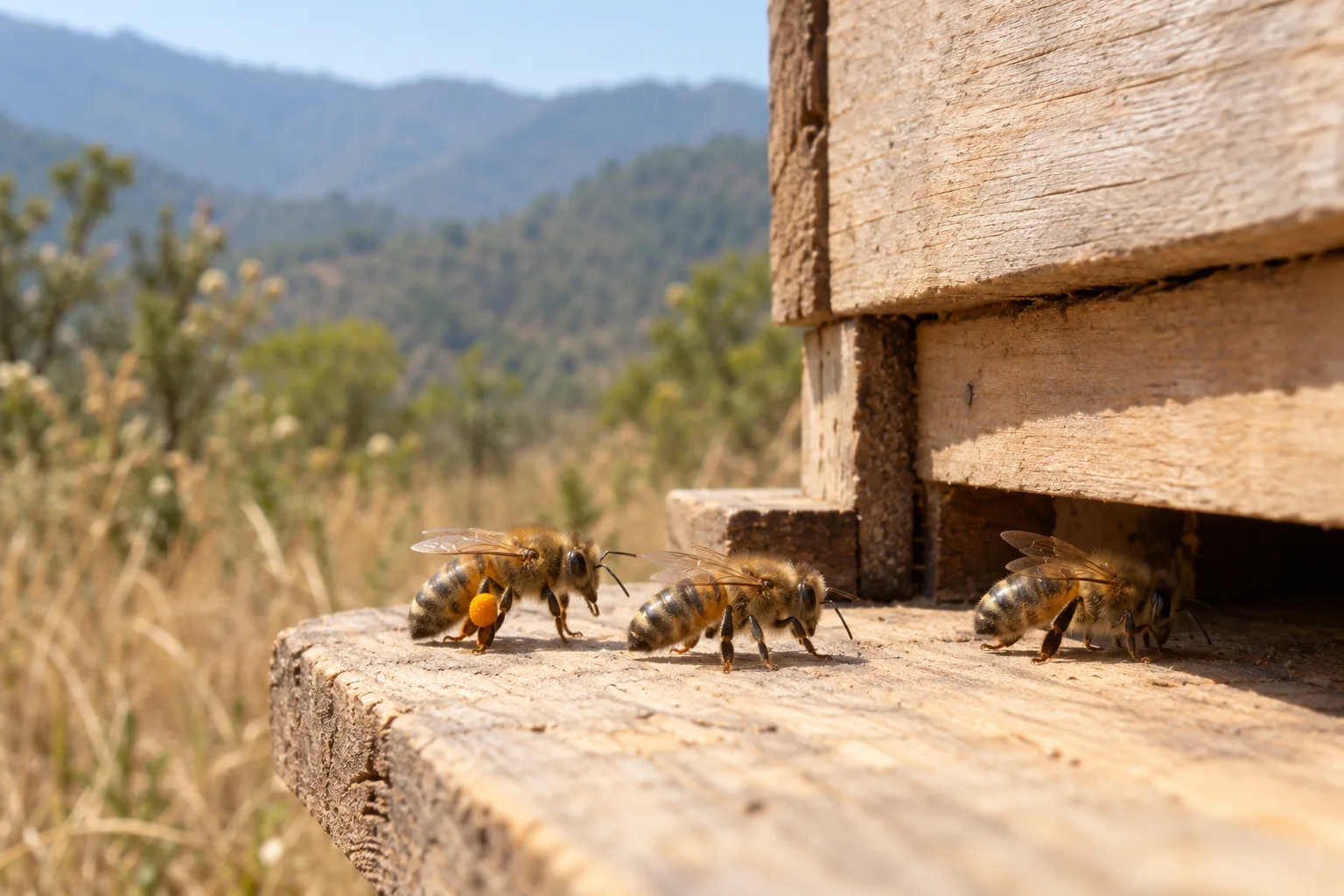
In March, a foothill hive feels like a house getting ready for a wedding: more family arriving every day, every room filling up, everyone busy.
The spring flowers are pouring in, and the colony is racing to grow. By April it is at its strongest. And then, if it gets too crowded, it may do something remarkable: split in two.
 From build-up to swarm season, the hive's busiest weeks come just before the lean months.
March: the build-up
As the spring flow arrives (mustard, basuti, mango, kachnar), the queen lays at full speed and the colony grows week by week. A Punjab hive calendar describes colonies building up steadily through March, with nectar and pollen stores growing. What flowers when.
April: the peak
Studies in Haryana find colonies at their strongest around April. Beekeepers add extra boxes, called supers, to give the bees room to store honey and to keep the brood nest from feeling crowded.
April to June: swarm season
A colony that runs out of room may raise a new queen and send the old queen off with roughly half the bees to find a new home. That cloud of bees hanging from a branch is a swarm. A Punjab calendar notes primary swarming can occur as the population peaks with the flow.
It is the colony's natural way to reproduce. For a beekeeper, it means half the workforce flies away just when the honey is coming in, so they add space and remove extra queen cells to keep the colony together.
Then the lean months
By June, the flowers fade in the heat, and the monsoon gap follows. The bees live off what they stored in spring. What a heatwave does to bees.
What it means for your jar
The "rush" is when the honey is made. The strong colonies of April work the last big blooms: shisham, jamun, then siris. Our Kalka jar is multiflora from this foothill season. The beekeeping year.
A myth worth clearing up
"A swarm is an angry attack." No. Swarming bees are usually calm. They have no home to defend yet. Still, keep your distance and call a local beekeeper.
A spring ritual
As the days warm, nimbu paani with a spoon of honey makes the switch from winter kadha to summer coolers. Stir it in well. Tradition, not medicine. Honey is not for babies under one.
Common questions
What should I do if a swarm lands in my garden? Leave it alone and call a local beekeeper. Swarms often move on within a day.
Do all hives swarm? No. Beekeepers try to prevent it by giving colonies room.
Keep reading
Part of our guide to how bees make honey.
Where this comes from
- Spring build-up through March and primary swarming at the population peak (Punjab): Plant Archives
- Adding supers and removing queen cells to prevent swarming: SGRR University lecture on seasonal management
- Colonies strongest in April in Haryana: Munis Entomology & Zoology
- Timing in the illustration is indicative.
Raw, unfiltered honey, bottled as it is. Made in the foothills' busiest weeks.
Find your Kalka jar, from ₹499 for ½ kg · or see what is coming next.
Not Your Beesness, sold on āsthālaya. Delivered across India.


