
Know your honey · 3 min read
The stone wall apiaries: wall hives and windbreaks in the hills
Stone and bees have a long partnership in the hills. Families once built hives right into the thick walls of their homes, and beekeepers today still use walls and slopes to shelter their boxes from the wind.
By Akhil Verma, Co-founder, Not Your Beesness ·
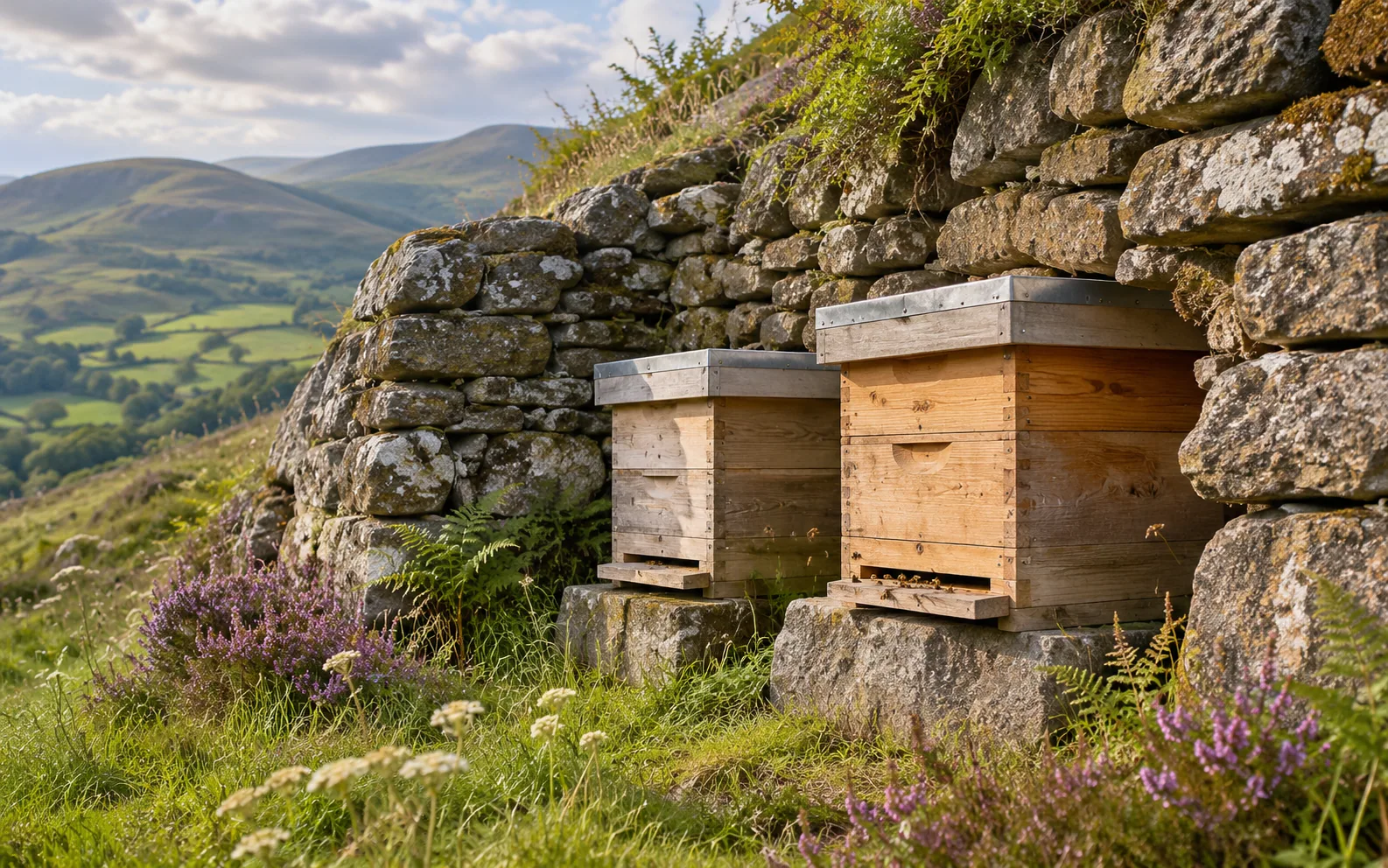
In some old hill villages, a small hole in a stone wall hums all summer. Behind it, inside the thickness of the wall, is a beehive.
Quick answer: Wall hives are beehives built into the thick stone-and-timber walls of hill homes: bees enter from outside and the family harvests through a door indoors. They're now rare, surviving in some old Kullu villages.
Wall hives are one of the oldest ways of keeping bees in the Himalaya. They are a clever use of what hill homes already had: thick walls of stone and timber that stay warm in winter and cool in summer.
 A hive inside the wall of a home: one of the hills' oldest ways to keep bees.
How a wall hive works
- A cavity is built into the wall when the house goes up.
- Outside, a small entrance lets the bees come and go.
- Inside, a wooden door lets the family open the hive and take honey.
The thick wall shelters the colony from cold, heat and wind. The bees live almost as part of the household.
Where they survive
A 2023 study of the Kullu valley found wall hives still in use, but rare, surviving mainly in old villages. They are usually home to the native Indian hive bee. In Himachal today, most managed colonies are European honeybees in wooden boxes; wall-hive colonies are the exception. The beekeeping heritage tells that story.
Stone walls as windbreaks
The other partnership is simpler. Bees struggle in wind: foraging falls off as wind rises and stops altogether in strong gusts. Do bees fly in wind? So beekeepers place hives behind walls, hedges or slopes that break the wind. In stony hill country, a field wall is a ready-made shelter. How beekeepers set up hives.
What we can't claim
The topic we were given talks about "placing hives inside traditional dry-stone windbreaks" in Lahaul. We don't claim how or where any Lahaul beekeeper sets their boxes. That's their practice to describe.
A myth worth clearing up
"Old-style hives make purer honey." Not necessarily. Wall and log hives often meant cutting or pressing whole combs. Modern boxes let beekeepers take only ripe, capped honey. Care matters more than the hive.
A village ritual
If you visit an old hill village, look closely at the walls of the oldest houses. A small, neat hole with a few bees around it may be a wall hive still in use. Ask the family about it. Most are proud to tell.
Common questions about wall hives
Are wall hives cruel to bees? No. They are a sheltered, natural cavity, much like the hollow trees wild colonies choose.
Can you see inside a wall hive? Only by opening the inner door, which the family does at harvest.
Keep reading
Part of our guide to how bees make honey.
Where this comes from
- Wall, log and box hives in Kullu; wall hives rare but surviving in old villages: Studies on traditional Apis cerana beekeeping practices in Kullu valley (KrishiKosh)
- Wall hives with the Asiatic hive bee: American Bee Journal
- Most managed colonies now Apis mellifera, except wall hives: Himachal Pradesh Horticulture Department, eUdyan
- Foraging stops in strong wind: University of Maine Cooperative Extension
- The drawing is schematic.
Raw, unfiltered honey, bottled as it is. Part of a long hill tradition.
Find your jar: Lahaul from ₹799 or Kalka from ₹499, for ½ kg · or see what is coming next.
Not Your Beesness, sold on āsthālaya. Delivered across India.


