
Know your honey · 3 min read
The Lahaul herb directory: a visual guide to the cold desert's plants
Over the past weeks we've written about fifteen plants of Lahaul's cold desert, from willows and wild thyme to edelweiss and sea buckthorn. Here they are in one place, sorted by what each gives bees, each linked to its full story.
By Akhil Verma, Co-founder, Not Your Beesness ·
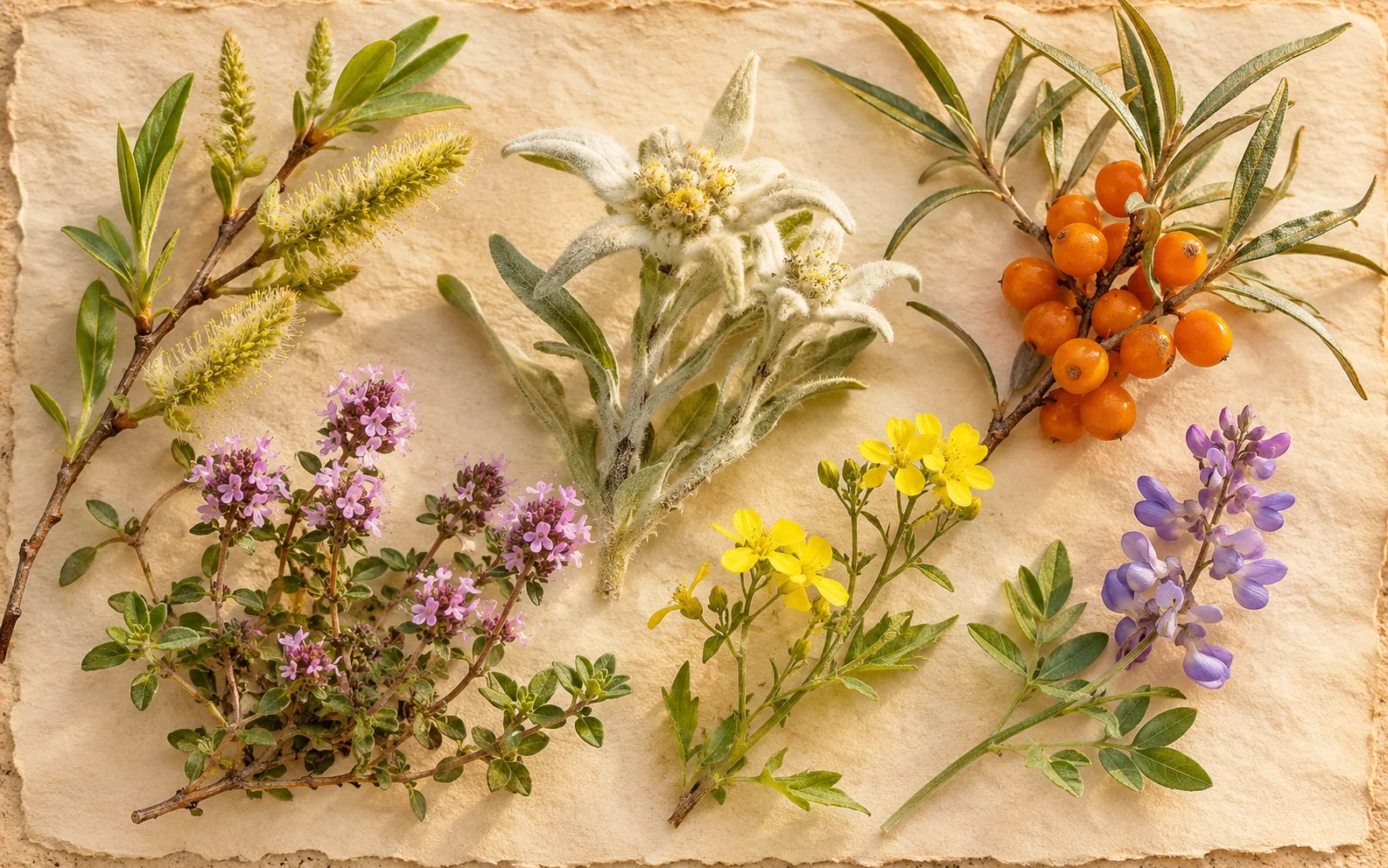
Lahaul looks bare from the road. Walk its fields, streams and meadows in summer and you'll find a surprising range of plants, and very different value for bees.
Quick answer: Lahaul plants that feed bees best include willow, wild thyme, white clover and buckwheat; dandelion, chicory and caraway help too. Sea buckthorn, Artemisia and the valley's few trees are wind-pollinated and give little nectar.
This directory gathers the Lahaul plants we've written about, sorted by what the evidence says each gives bees. Click through for the sources on each.
 Fifteen plants, three kinds of value to bees.
Good bee food
- Willow: catkins on bare twigs in early spring; pollen and nectar. The high pass willow margins.
- Wild thyme (jangli ajwain): a bee favourite wherever it's common. The wild thyme patches.
- White clover: small florets honeybees can easily reach. The alpine clover cycle.
- Buckwheat: a strong nectar crop of the cold, dry Himalaya. The wild buckwheat fields.
Some value, or little known
- Dandelion: early nectar, thin pollen. The alpine dandelion rush.
- Chicory: open only in the mornings. The alpine chicory bloom.
- Wild caraway (shingujira): many insects visit. The wild caraway bloom.
- Potentilla: open, easy flowers. The glacier-fed potentilla.
- Forget-me-not: at height, visited by flies more than bees. The wild forget-me-not bloom.
- Himalayan rhubarb: pollinated by wind and insects. The wild rhubarb margin.
- Himalayan angelica: endangered; visited mostly by flies and beetles. The wild angelica mystery.
- Edelweiss: tiny flower heads; little known for bees. The alpine edelweiss myth.
Wind-pollinated: little nectar
- Sea buckthorn: its value is the berry. The sea buckthorn shift.
- Artemisia ("wild sage"): a wind-pollinated shrub. The wild sage clumps.
- Blue pine, birch and juniper: the cold desert's few trees. The blue pine margins.
What this directory isn't
It's a guide to the landscape, not a list of what's in our jar. Our Lahaul honey is multiflora, and only pollen analysis could show which of these plants contributed. What pollen counts can tell.
A myth worth clearing up
"Every flower in a valley ends up in its honey." No. Bees concentrate on plants that give plenty of nectar close to the hive. Wind-pollinated and rare plants contribute little or nothing.
A field-guide ritual
Save this page before a Lahaul trip. In July, see how many of these fifteen you can spot, and which ones have bees on them.
Common questions about Lahaul plants
Which Lahaul plant matters most for bees? In spring, likely willow, for its early pollen. In summer, a mix of meadow and field flowers.
Are any of these plants protected? Himalayan angelica is endangered and Himalayan rhubarb is vulnerable. Leave their roots in the ground.
Keep reading
- The glacier-fed potentilla
- The high pass willow margins
- The trans-Himalayan terroir
- The wild angelica mystery
- The high-pass flora
Part of our Lahaul honey guide.
Where this comes from
- Each plant's facts and sources are in its linked post.
- The colour grouping summarises those posts' findings; it is not a measurement of any honey.
Raw, unfiltered honey, bottled as it is. From a whole valley of mountain flowers.
Meet the Lahaul jar, from ₹799 for ½ kg · or see what is coming next.
Not Your Beesness, sold on āsthālaya. Delivered across India.


