
Know your honey · 3 min read
The isolated hive project: what Lahaul's remoteness can, and can't, do for honey
A remote mountain valley feels like a natural guarantee of pure honey. It helps with some things: distance from factories and heavy traffic, and bees working the valley's own flowers. But purity is also decided after the harvest, and no geography can promise that.
By Akhil Verma, Co-founder, Not Your Beesness ·
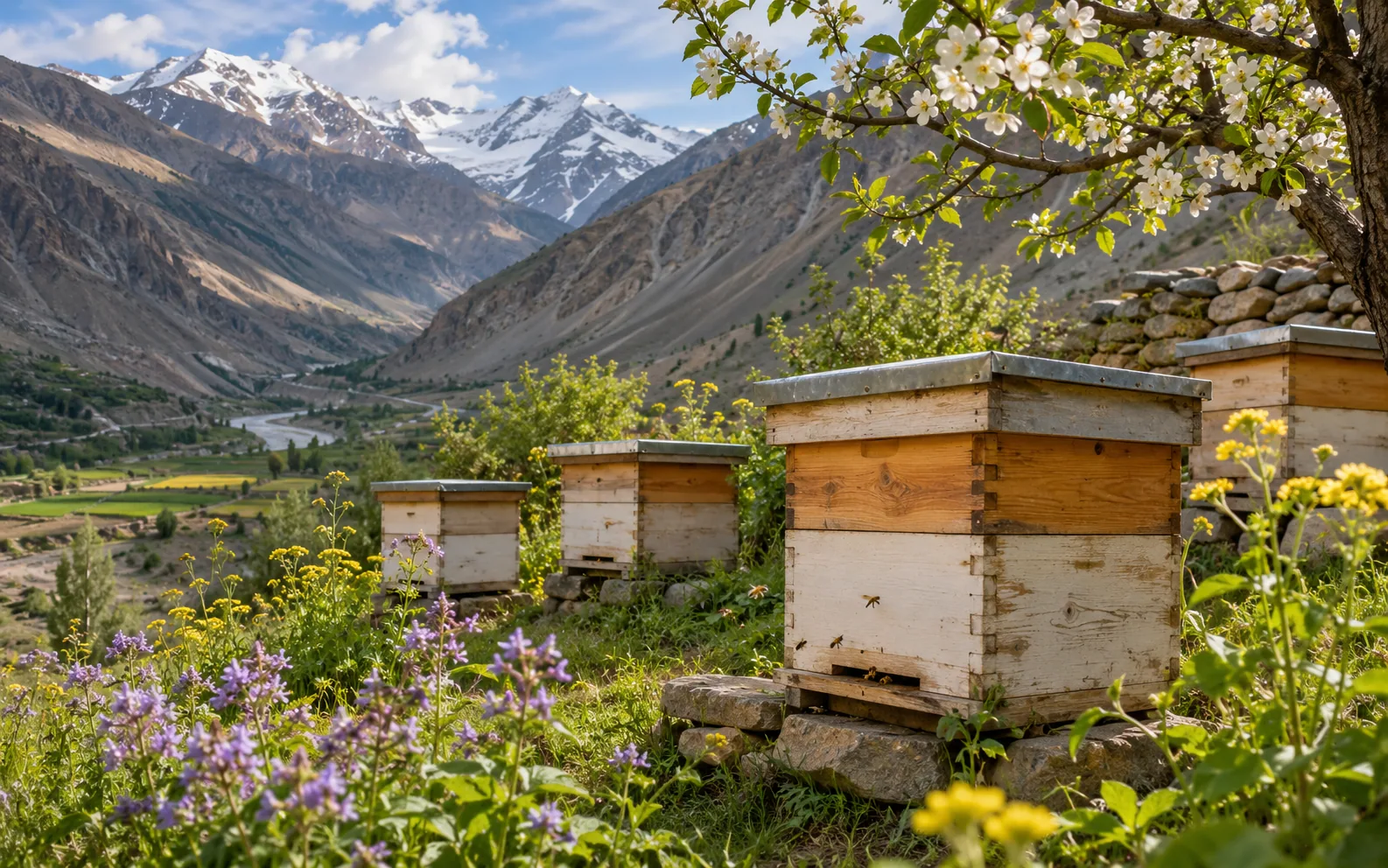
Lahaul is a long way from anywhere. That is part of its magic. It is tempting to say that makes its honey automatically pure.
Quick answer: Mountain honey isn't automatically pure: remoteness keeps bees away from factories and traffic, but syrup can still be added after harvest. Purity depends on honest handling and testing.
The topic we were given calls Lahaul's geography "a natural purity barrier". Some of that is fair. Some of it promises more than any mountain can deliver. Here is the honest split.
 Distance helps. It doesn't replace honesty or testing.
What remoteness helps with
Distance from heavy pollution. Studies in several countries have found more metal in honey near busy roads. Lahaul's valleys are far from big cities, heavy industry and dense traffic. That is a genuine advantage. The Shivalik eco-buffer looks at those studies.
The valley's own flowers. Bees usually forage within about 2 miles of the hive. In a high valley ringed by mountains, that circle holds the valley's own fields, willows and meadows. The glacial stream nectar.
What it can't do
Stop adulteration. The biggest threat to honey purity isn't the air. It's syrup added after harvest, by someone in the supply chain. No mountain can prevent that. Only honest handling can.
Replace testing. Lahaul is farmed: peas, potatoes and other crops grow in its fields. Any farmed valley may use sprays. We found no study measuring pesticides in Lahaul honey, either way. Remoteness is not a lab result.
Prove origin. A label can say "Himalayan" whether the honey came from the mountains or not. Records, traceability and tests are what prove where honey came from. The local apiary journals covers India's honey traceability portal.
What purity really depends on
- Bees making the honey from flowers, not from sugar feeding during the honey flow
- Harvesting ripe, capped honey
- No syrup added, ever
- Gentle handling: no heating, coarse straining only. The final Kalka press.
- Meeting FSSAI standards, which set limits for honey quality
A myth worth clearing up
"Mountain honey can't be fake." It can. Some of the most adulterated honey sold anywhere carries the most romantic mountain labels. Trust the seller, not the scenery.
A buyer's ritual
When you buy honey, ask three questions: Where was it harvested? Is anything added? Has it been heated? A good seller answers all three without hesitating.
Common questions about mountain honey purity
Is your Lahaul honey tested? Ask us about any batch and we'll tell you what has been checked. We'd rather show than claim.
Can I test honey for purity at home? Not reliably. The ant test and water tests don't work. Two places, two jars explains why.
Keep reading
Part of our real honey guide.
Where this comes from
- Usual foraging area of about 3.2 km (2 mi): Wikipedia, Forage (honey bee)
- Peas and potatoes as Lahaul crops: ICAR Krishi Vigyan Kendra, Lahaul action plan
- Metals in honey near busy roads: see sources in The Shivalik eco-buffer
- No source measures pesticides in Lahaul honey. The drawing is schematic.
Raw, unfiltered honey, bottled as it is. Remote by nature. Honest by choice.
Meet the Lahaul jar, from ₹799 for ½ kg · or see what is coming next.
Not Your Beesness, sold on āsthālaya. Delivered across India.


