
Know your honey · 3 min read
The spring equinox harvest: why no honey has a flavour fixed by its date
It would make a lovely label: the exact taste of a March 21st press. But bees don't read calendars. Here is what really decides a harvest, and how to describe the honey in your own jar.
By Akhil Verma, Co-founder, Not Your Beesness · · Updated
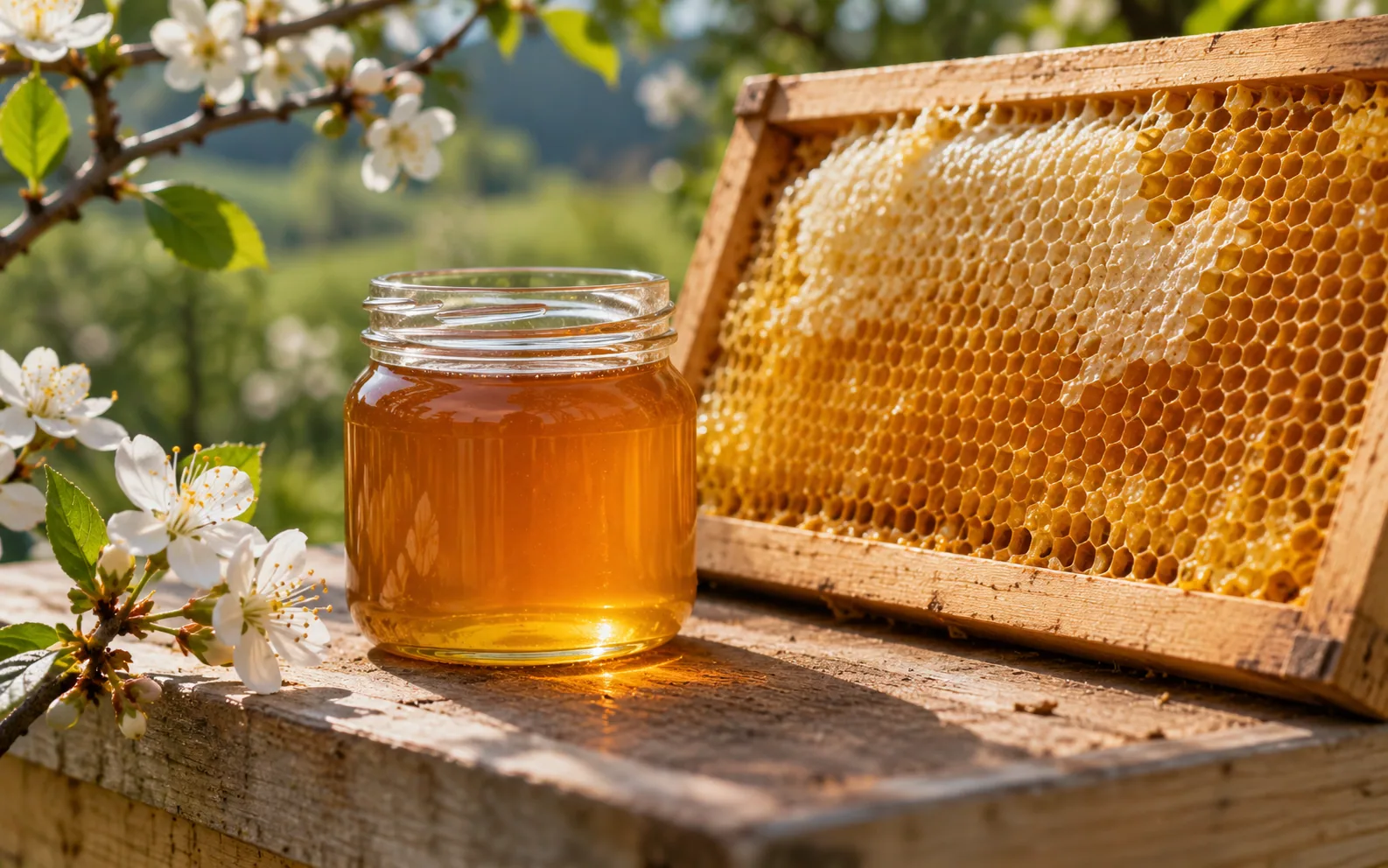
The spring equinox falls around March 21st, when day and night are nearly equal. It is a beautiful date. It is not a harvest plan.
We were asked to describe "the exact flavour of our March 21st Kalka press". The honest answer is that no honey has an exact flavour fixed by its date, and any brand that tells you otherwise is guessing. What we can give you is something more useful: a way to taste your own jar.
 A shared vocabulary for taste. Not a promise tied to a date.
What really decides a harvest
Bees turn nectar into honey by drying it in the comb. When a cell is ripe, they seal it with a cap of wax. Beekeepers wait for frames to be mostly capped before they take them. How bees dry honey explains why.
So harvest follows the comb, the flowers and the weather, not a date. A warm spring brings it forward. A cold, wet one pushes it back. The same day in two different years can give two quite different honeys. The foothill beekeeping year shows the rough shape of the seasons.
What spring honey is generally like
Early-season honey in the foothills comes from the first flush of blossom. It is often lighter in colour than the dark honeys of autumn, though it varies batch to batch. Kalka's early March nectar covers what we can say about it.
The flavour wheel: taste like a pro
At the University of California, Davis, a trained panel tasted many honeys and agreed on around a hundred words to describe them. They grouped those words into families:
- Floral, like rose or jasmine
- Fruity and citrus, like ripe fruit or lemon peel
- Herbal, like fresh green herbs
- Woody and resinous, like dry wood or pine
- Caramel, like toffee or jaggery
- Earthy, like damp soil or mushroom
- Spicy, like cinnamon or clove
The wheel leaves out "sweet" on purpose. Every honey is sweet. The interesting part is what sits behind the sweetness.
A myth worth clearing up
"Honey harvested on a special day tastes special." Not because of the day. Taste comes from the flowers the bees worked and how ripe the honey was when it was taken. A date on its own tells you nothing.
A tasting ritual for the family
Put a little honey on a clean steel spoon. Smell it first. Then let it melt on your tongue and wait. Is it floral? Woody? Caramel? Is there a slight tang at the end? Write down what each person finds. Daadi often wins.
Common questions
Do you harvest on fixed dates? No beekeeper can honestly do that. Harvest depends on capped comb and the season.
Will two jars of Kalka honey taste the same? Close, not identical. Multiflora honey shifts a little with each season's flowers. That is part of its charm.
Keep reading
Part of our real honey guide.
Where this comes from
- Honey flavour and aroma wheel, trained panel, around 100 descriptors, "sweet" left out: UC Davis Honey and Pollination Center; background
- Harvest of capped, ripe comb is standard beekeeping practice. See also our posts linked above.
- The family examples above are everyday comparisons, not the wheel's own descriptors.
Raw, unfiltered honey, bottled as it is. Taken when the comb is ready, not when the calendar says.
Find your Kalka jar, from ₹499 for ½ kg · or see what is coming next.
Not Your Beesness, sold on āsthālaya. Delivered across India.


