
Know your honey · 3 min read
The Keylong valley agriculture: how Lahaul's farming shapes its summer
Lahaul farms one short, irrigated season a year: seed potatoes, peas, vegetables and a few rare herbs. The crops themselves do little for honey. The water and green that farming brings do much more.
By Akhil Verma, Co-founder, Not Your Beesness ·
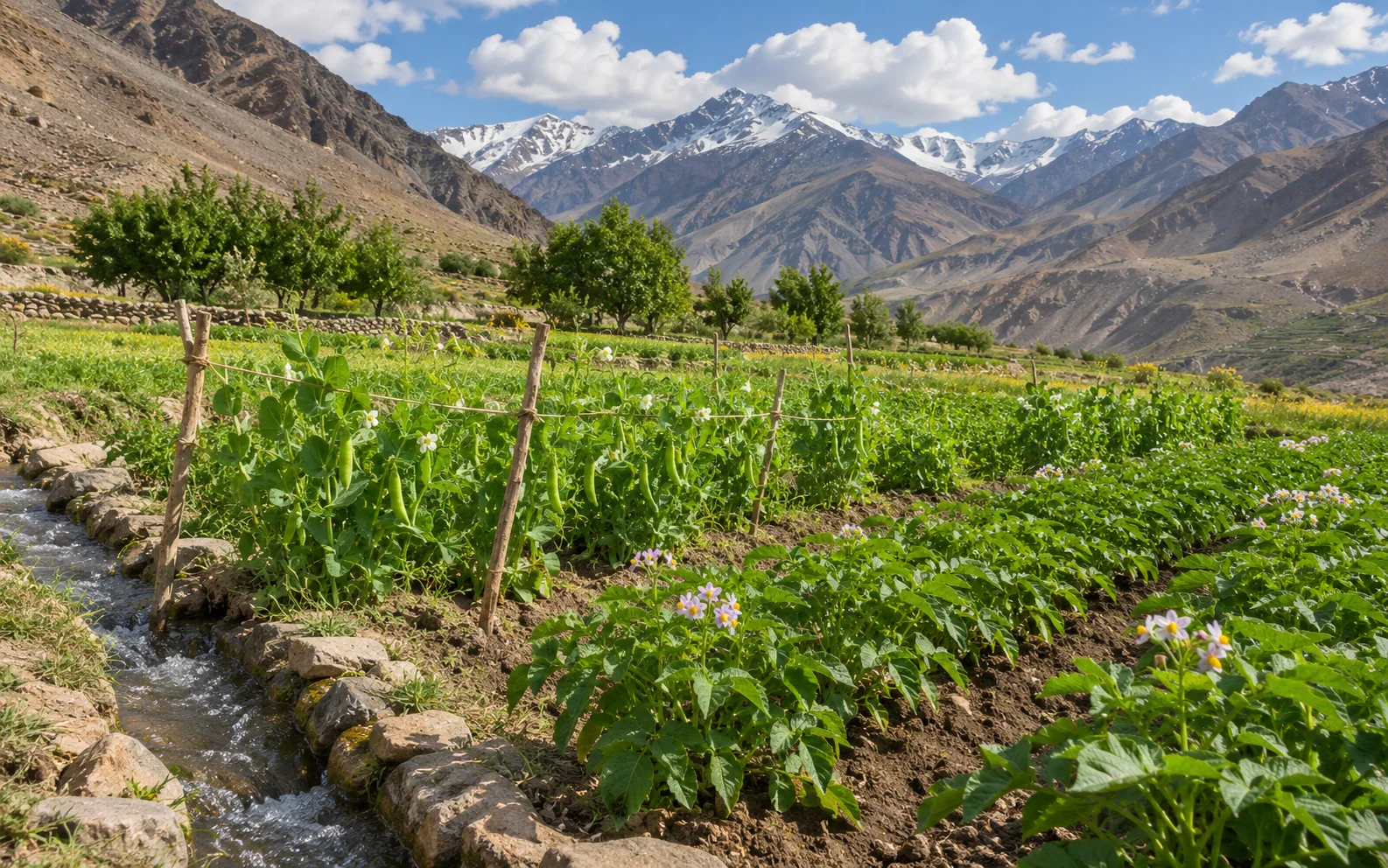
In July, the fields around Keylong are a patchwork of green: potatoes, peas and vegetables, edged with willows and watered by snowmelt.
Quick answer: Lahaul farming fits one irrigated season a year: seed potatoes since an 1854 farm near Keylong, peas, vegetables, kuth and heeng. The crops do little for honey; the irrigation water and the green belt it creates do more.
Lahaul has only one cropping season a year, between the spring thaw and the autumn frost. Its farmers have made the most of it, and the result shapes the valley's whole summer, including for bees.
 One short season, carefully farmed.
A potato valley
Lahaul is best known for seed potatoes, sold across India to grow the next crop. The story is traced to 1854, when a missionary started a farm near Keylong. Today, companies also contract Lahaul farmers for chip varieties.
Peas, vegetables and hops
Peas are the other big cash crop, alongside cauliflower and other vegetables. Around 5,400 acres (2,200 hectares) were under vegetables in 2019. Hops, once a major earner, have declined as cheaper imports came in.
Rare herbs
- Kuth, a wild medicinal herb, was domesticated from the 1920s, the valley's oldest cash crop. It's now endangered and a conservation priority.
- Heeng (asafoetida): Lahaul and Spiti was the first district in India to start growing it.
What it means for bees
The crops themselves do little for honey:
- Seed potatoes are grown for tubers, not flowers.
- Peas can pollinate themselves, so they need bees less than many crops.
But farming brings water. Hand-dug channels carry snowmelt to the fields, and with the water come willow rows, field edges and weeds that do flower. In a cold desert, that irrigated green belt is where most of the valley's flowers, and bees, are. The glacial stream nectar.
A myth worth clearing up
"Farm valleys make crop honey." Not here. Lahaul's main crops aren't nectar crops. Its honey comes from the mix of flowers that farming water keeps alive.
A travel ritual
If you're in Lahaul in July or August, buy a bag of local potatoes or peas from a roadside stall. You'll be eating the same short summer the bees are working.
Common questions about Lahaul farming
Why is Lahaul good for seed potatoes? Its cold, dry climate keeps many potato pests and diseases down, which matters for seed.
Is buckwheat grown in Lahaul? Buckwheat suits the cold, dry Himalaya. The wild buckwheat fields.
Keep reading
Part of our Lahaul honey guide.
Where this comes from
- Lahaul seed potatoes since an 1854 missionary farm near Keylong; contract farming for chip varieties: Indian Potato; The Sentinel
- Peas, cauliflower and hops; hops in decline; about 2,200 ha under vegetables (2019); kuth domesticated from the 1920s and endangered: The Tribune
- First district in India to grow heeng: The Tribune
- Pea plants can self-pollinate: Wikipedia, Pea
- One cropping season a year: see sources in The Lahaul summer rush
Raw, unfiltered honey, bottled as it is. From the green belts of a cold desert.
Meet the Lahaul jar, from ₹799 for ½ kg · or see what is coming next.
Not Your Beesness, sold on āsthālaya. Delivered across India.


