
Know your honey · 3 min read
The monastic gardens: the old Buddhist monasteries of Lahaul
Lahaul's Buddhist monasteries have stood for centuries above its villages and fields. Here are four of the best known, from Guru Ghantal to Kardang, and an honest note on the 'gardens' around them.
By Akhil Verma, Co-founder, Not Your Beesness ·
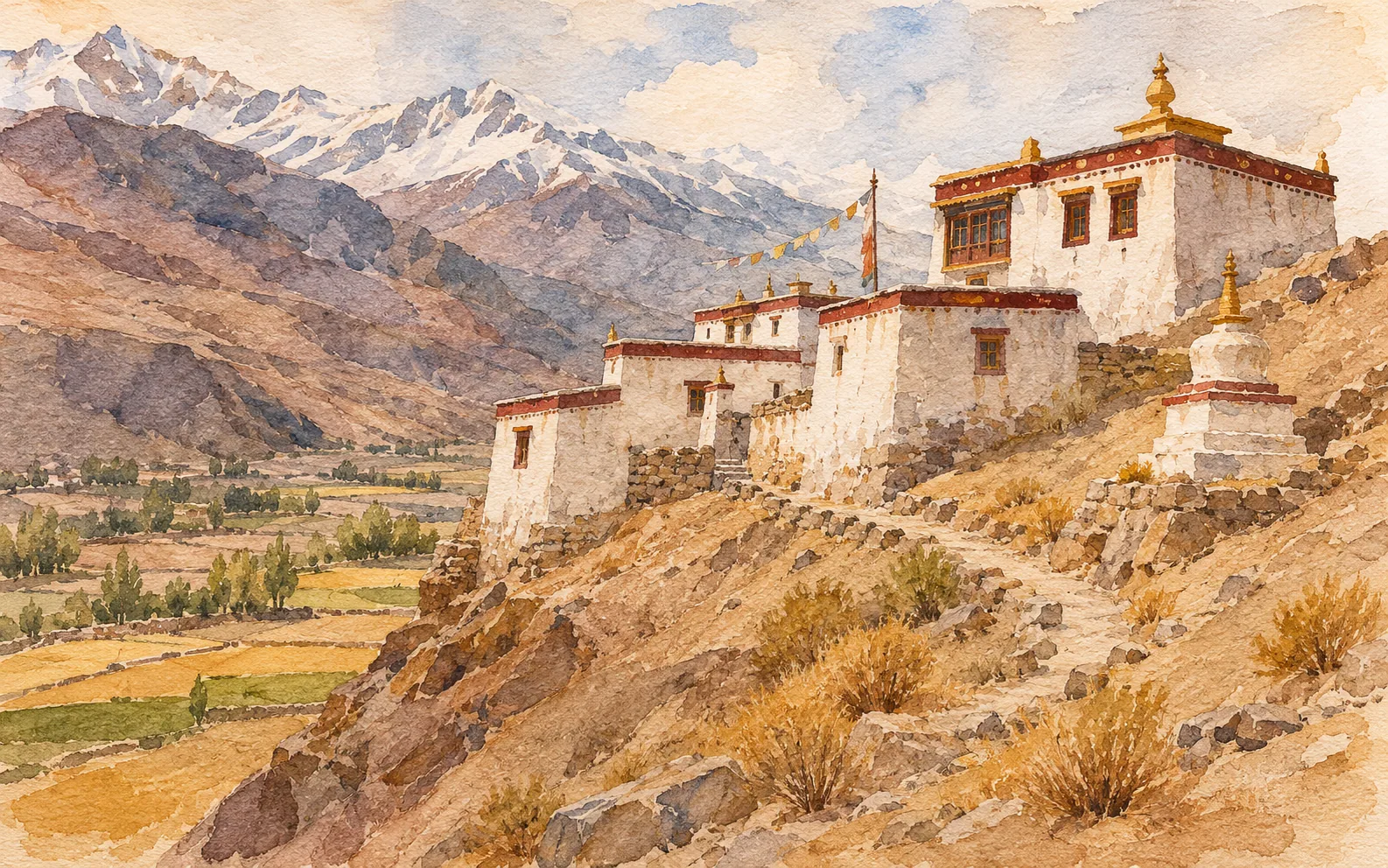
Above Keylong, prayer flags snap in the wind from monastery roofs that have watched over the valley for centuries.
Quick answer: Lahaul monasteries include Guru Ghantal (traditionally 8th century, the oldest), Kardang (the largest, about 11,500 ft, rebuilt 1912), Shashur among blue pines near Keylong, and Tayul from the early 1600s.
Lahaul has a long Buddhist history, shared with neighbouring Ladakh and Tibet. Its monasteries, or gompas, are among the oldest buildings in the valley. The topic we were given asked about "sourcing honey near the historic Buddhist monasteries". Here's what we found, and what we didn't.
 Centuries of history above the valley's fields.
Four monasteries
- Guru Ghantal, near Gondhla. Tradition says it was founded by Padmasambhava in the 8th century, making it Lahaul's oldest by most accounts. It was badly damaged in the 1975 earthquake and rebuilt. The Gondhla castle corridor.
- Kardang, Lahaul's largest, at about 11,500 feet, on the far bank of the Bhaga facing Keylong. Believed to date from the 12th century, it lay in ruins until it was renovated in 1912.
- Shashur, on a hill about 2 miles from Keylong, among blue pines. Founded in the 16th or 17th century, it's known for its summer mask dance.
- Tayul, near Keylong, founded in the early 1600s, with a great statue of Padmasambhava.
Founding dates are traditional and vary by source.
About the "gardens"
We looked for monastery gardens, or monastery apiaries, in Lahaul and found no record of either. The green around the monasteries is mostly village fields and willow rows, watered by the same hand-dug channels as the rest of the valley. The glacial stream nectar. At Kardang, monks traditionally spend summers helping their families in those fields.
What we can't claim
We don't claim our honey comes from near any monastery, or that sacred places give honey a special quality. Bees forage on flowers, wherever they grow.
A myth worth clearing up
"Temple or monastery honey is purer." Not by itself. A peaceful setting is lovely, but honey quality comes from ripe harvesting and honest handling.
A visitor's ritual
If you visit a Lahaul monastery, walk around it clockwise, as is the custom, and look out over the fields below. In July, you'll see the valley's short summer at its greenest.
Common questions about Lahaul monasteries
Which is the oldest monastery in Lahaul? Guru Ghantal, by most accounts, traditionally dated to the 8th century.
When is the Shashur mask dance? In summer, usually June or July. Dates follow the Tibetan calendar.
Keep reading
- The Keylong valley agriculture
- The Gondhla castle corridor
- The Miyar valley excursion
- The Jispa valley harvest
Part of our Lahaul honey guide.
Where this comes from
- Kardang: Lahaul's largest monastery, about 3,500 m, 12th century, renovated in 1912, facing Keylong across the Bhaga; monks working family fields in summer: Wikipedia, Kardang Monastery
- Guru Ghantal, Shashur, Tayul and founding dates: Lahaul and Spiti district, monasteries in Lahaul; Himachal Pradesh tourism, Buddhist pilgrimage
- Guru Ghantal damaged in the 1975 earthquake: Wikipedia, Gondhla
- No source records monastery gardens or apiaries in Lahaul. Heights converted from metres and rounded.
Raw, unfiltered honey, bottled as it is. From a valley of old traditions.
Meet the Lahaul jar, from ₹799 for ½ kg · or see what is coming next.
Not Your Beesness, sold on āsthālaya. Delivered across India.


