
Know your honey · 3 min read
The Gondhla castle corridor: the seven-storey tower of the Chandra valley
On the road from the Atal Tunnel to Keylong, a tall tower of stone and timber stands over the village of Gondhla. It's one of Lahaul's great landmarks, and a lesson in how hill people built to last.
By Akhil Verma, Co-founder, Not Your Beesness ·
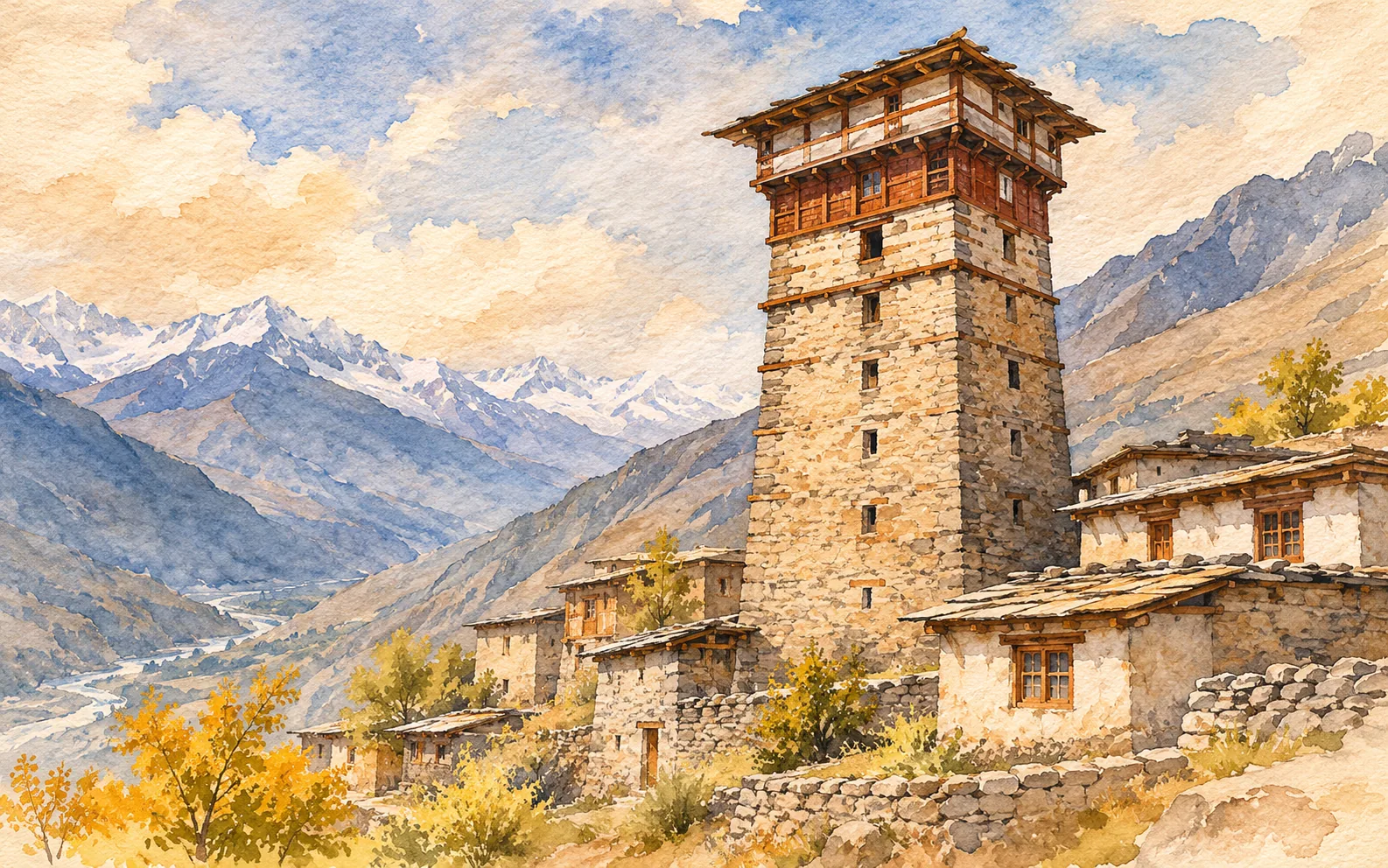
Drive through the Chandra valley towards Keylong and a tall, striped tower rises above the village of Gondhla. It has watched over this valley for centuries.
Quick answer: Gondhla fort is a seven-storey tower of stone and timber in the kath-kuni style, at about 10,370 ft in Lahaul's Chandra valley. Seat of the Thakurs of Gondhla, it dates to around 1700 or earlier.
Gondhla's tower fort is one of Lahaul's best-known historic buildings. It's not a honey story. It's here because the topic we were given asked about "sourcing honey near the historic valley structures", and the honest answer starts with the building itself.
 Stone and timber, stacked seven storeys high.
Where it stands
Gondhla is a village at about 10,370 feet in the Chandra valley (called Tinan locally), about 11 miles before Keylong on the road from Manali.
The tower
- A seven-storey tower fort, with a wooden verandah around the top floor.
- It was the seat of the Thakurs of Gondhla, who governed the Chandra valley on behalf of the Rajas of Kullu.
- It now stores old weapons, furniture, thangkas, scriptures and family deities.
How it was built
The tower uses kath-kuni, a classic hill building style of alternating layers of stone and timber. The timber binds the stone and lets the structure flex, which is why many kath-kuni buildings have stood through earthquakes. One account says its cedar beams were carried over the Rohtang Pass from forests near Manali.
When
Sources differ. One account dates it to around 1700, in the time of Raja Man Singh of Kullu. Local tradition says it's older. The district gazetteer and the family's own history don't fully agree.
Guru Ghantal nearby
Close to Gondhla stands Guru Ghantal, traditionally said to be Lahaul's oldest monastery. The monastic gardens covers Lahaul's monasteries.
What we can't claim
We don't claim our honey comes from near Gondhla, or that historic buildings change a honey. Bees forage on flowers, wherever they grow.
A myth worth clearing up
"Old places make old-fashioned, purer honey." No. Honey quality comes from ripe harvest and careful handling, not from the landmarks nearby.
A traveller's ritual
If you stop at Gondhla, look closely at the tower's stripes of stone and wood. It's a lesson in building for a hard climate, the same climate the valley's bees live through each year.
Common questions about Gondhla fort
Can you visit the Gondhla fort? It's privately held by the Thakur family. Ask locally about access.
What is kath-kuni? A traditional Himalayan building style of alternating stone and timber layers, common in Himachal.
Keep reading
- The monastic gardens
- The Pangi border margins
- The Sissu waterfall corridor
- The Miyar valley excursion
Part of our Lahaul honey guide.
Where this comes from
- Gondhla at 3,160 m (10,370 ft), about 18 km (11 mi) before Keylong, in the Chandra (Tinan) valley; seven-storey tower in kath-kuni style; Thakurs of Gondhla under the Rajas of Kullu; dating disputes; cedar from Manali carried over Rohtang; Guru Ghantal monastery: Wikipedia, Gondhla
- Seven-storey tower with a wooden verandah: Lahaul and Spiti district, tourist places
- The drawing is schematic.
Raw, unfiltered honey, bottled as it is. From a valley with a long history.
Meet the Lahaul jar, from ₹799 for ½ kg · or see what is coming next.
Not Your Beesness, sold on āsthālaya. Delivered across India.


