
Know your honey · 3 min read
The high-pass logistics: how heat, not cold, is the enemy of a honey jar
A jar of Lahaul honey starts its life in the cold and travels down to the heat of the plains. Cold does honey no harm. Long, warm storage does, slowly. Here's what storage studies show, and how to look after your jar.
By Akhil Verma, Co-founder, Not Your Beesness ·
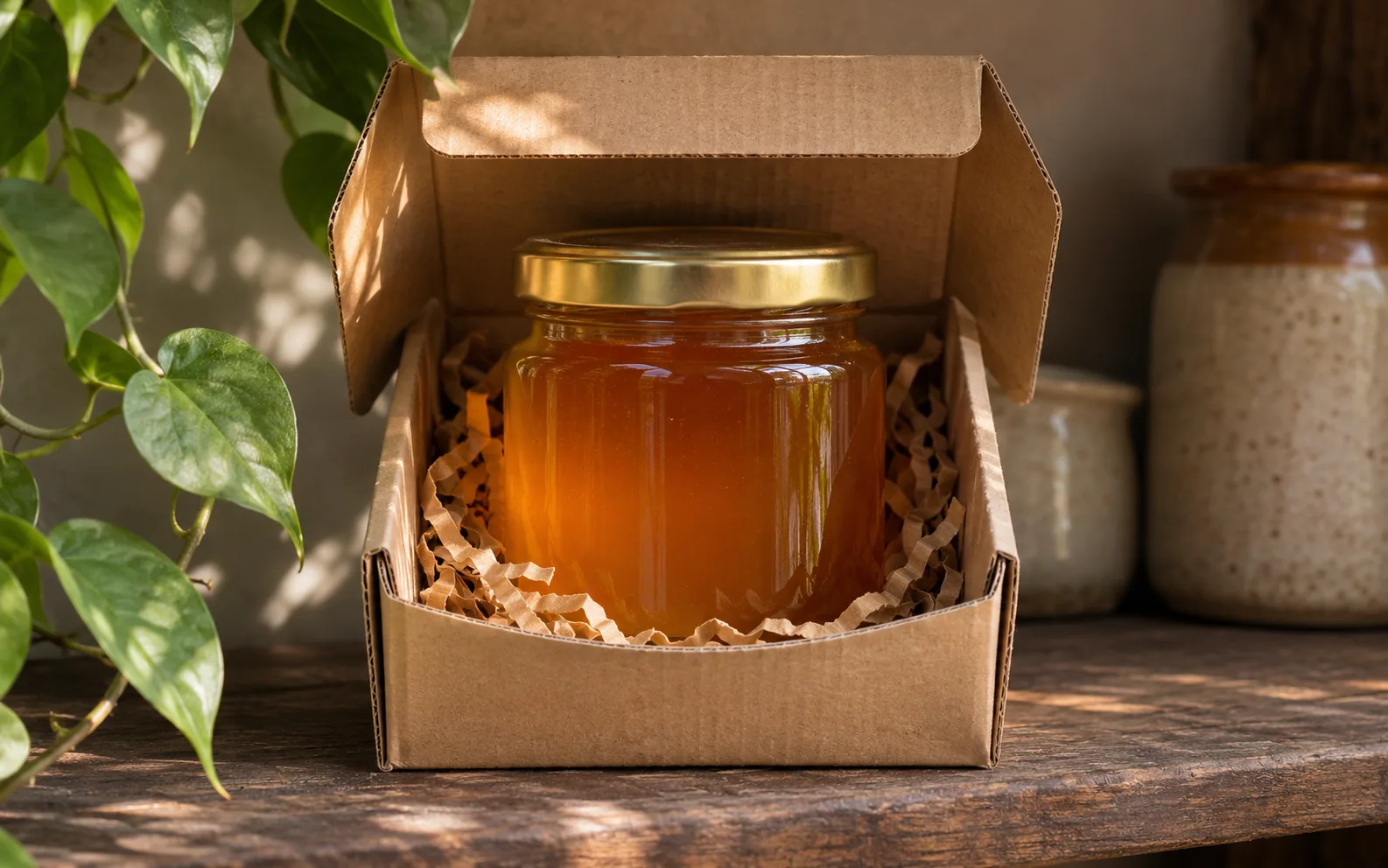
A jar of Lahaul honey begins in one of the coldest places in India and ends up on a kitchen shelf in the plains. The cold at the start doesn't worry us. The heat at the end is what to watch.
Quick answer: Does heat damage honey? Slowly, over months: in storage studies, honey kept at 35°C passed the HMF freshness limit in about 2–6 months, while honey at 0–25°C stayed within limits. Cold does no harm.
Honey is famously long-lasting. But "lasts for years" isn't the same as "doesn't change". Over months, heat slowly changes honey's chemistry. Here's what the studies say.
 Cold is fine. Months of heat are not.
The freshness markers
Food labs check two things to see whether honey has been heated or stored badly:
- HMF (hydroxymethylfurfural), a compound that slowly forms when honey's sugars are warmed. Fresh honey has very little.
- Diastase, one of the enzymes bees add. It slowly breaks down with heat and time. Honey enzymes.
What the storage studies found
- Kept at 0–25°C, a study of one honey found it stayed within limits for all eight months tested.
- Kept at 35°C, the same honey's HMF passed the standard limit after about two months, and its diastase fell below the limit after about seven.
- A Turkish study of strained honeys found HMF stayed low for a year at 10–22°C, but at 35°C passed the limit from about six months.
Different honeys age at different speeds. The pattern is clear, though: warmth over months is what ages honey.
What that means for the journey
- In Lahaul: cold. Honey may thicken or set. That's harmless. Why honey sets.
- On the road and in storage: the lower and later, the warmer. Short trips matter little; months in a hot godown would.
- In your kitchen: keep it in a cool cupboard, away from the stove and sunny windows.
A myth worth clearing up
"Honey never goes off, so storage doesn't matter." Half true. Honey resists spoiling, but long, hot storage slowly darkens it, raises HMF and lowers its enzymes. Cool and closed keeps it at its best.
A storage ritual
Pick one cool, dark spot for honey, like you would for good ghee. Keep the lid tight and use a dry spoon. In summer, don't leave the jar near the gas. How to store honey.
Common questions: does heat damage honey?
Should I keep honey in the fridge in summer? No need. Cold makes it set faster. A cool cupboard is enough.
Will a few hot days in transit hurt my honey? Not noticeably. The studies show changes over months, not days.
Keep reading
- The high altitude pressure
- The final Kalka press
- Beyond the Rohtang Pass
- The high pass willow margins
Part of our real honey guide.
Where this comes from
- Talh honey: within limits at 0 and 25°C for eight months; at 35°C HMF over the limit after about two months and diastase below it after about seven: Molecules, 2022 (PubMed Central)
- Strained honeys: HMF low at 10 and 22°C for a year, over 40 mg/kg at 35°C from the sixth month: Ankara University Faculty of Veterinary Medicine Journal, 2017
- The journey in the illustration is general, not a record of any one shipment.
Raw, unfiltered honey, bottled as it is. Never heated, and best kept cool.
Find your jar: Lahaul from ₹799 or Kalka from ₹499, for ½ kg · or see what is coming next.
Not Your Beesness, sold on āsthālaya. Delivered across India.


