
Know your honey · 4 min read
The early freeze alert: what unseasonal snow means for bees in the hills
In Lahaul, snow is expected in winter. Snow in September, or a cold snap in April, is another matter. Here's what happens when it arrives early, and why it's so hard on bees.
By Akhil Verma, Co-founder, Not Your Beesness ·
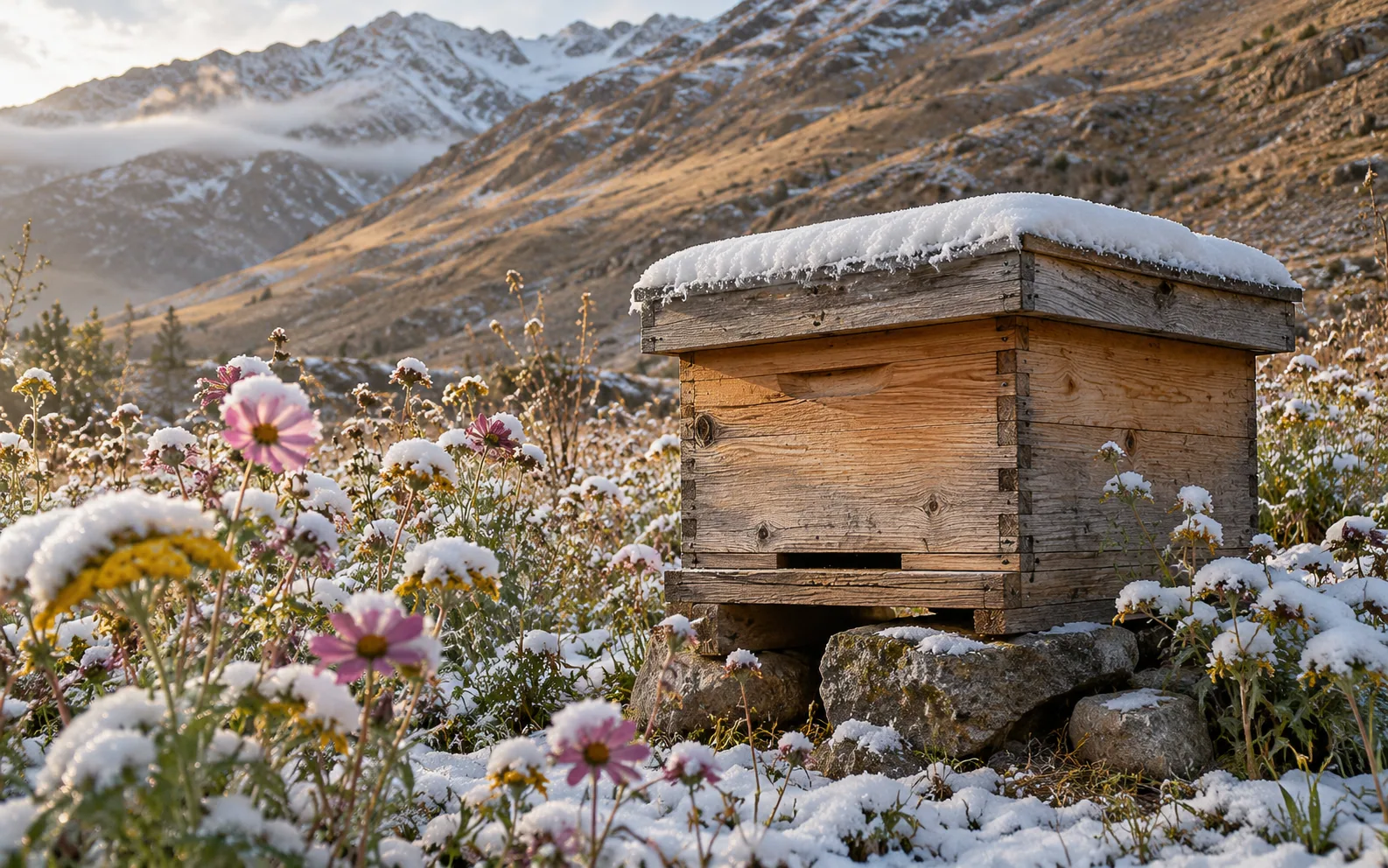
Lahaul expects snow. What it doesn't expect is snow in September, while the fields are still full.
Quick answer: Unseasonal snow hits bees hardest mid-season: below about 59°F (15°C) they can't forage and live only a few days on reserves. Lahaul saw about 2 ft in September 2018, and April 2023 cold killed many rented bees in the hills.
Lahaul's season is short: the passes clear in spring, the valley farms one summer, and winter shuts it in again. When snow comes weeks early, or cold returns in spring, it catches crops, people and bees out of step. The Lahaul summer rush.
 When winter arrives early, or comes back.
Three recent shocks
- Late September 2018. About 2 feet of snow fell on Lahaul in roughly a day. It was described as the heaviest out-of-season snowfall since 1955. Potatoes, peas and apples were buried before harvest, and farmers' losses were put at over Rs 300 million (Rs 30 crore).
- April 2023. Unseasonal rain and snow hit orchards at blossom time. Many Italian honeybees rented for pollination died in their boxes, mostly at about 7,000 ft and above, in Shimla, Kinnaur, Kullu and Lahaul-Spiti.
- October 2025. Keylong recorded its earliest snowfall in 17 years: about 8 inches, and 10 inches at Gondhla.
Why a sudden cold snap hurts bees
- Bees can't fly and forage in the cold. In 2023, a state plant-protection officer said that below about 59°F (15°C) bees can't work, and survive only a few days on their reserves unless fed.
- In the cold, a colony forms a tight winter cluster, from about 57°F (14°C). That works in a planned winter with full stores. It's much harder when the cold arrives in the middle of a busy season. The sub-zero survival strategy.
- In Himachal, many beekeepers using Italian bees move their hives to the plains for winter. An early snow can catch colonies before they've left. The nomadic keepers.
What we can't claim
The title asks what happens "when unexpected snow hits Lahaul's hives". We don't have records of our own hives in these events, so we describe what's been reported, not a story of ours.
A myth worth clearing up
"Snow is just winter coming early." Not for bees. The danger isn't the cold itself; it's cold arriving while colonies are still working the season, with stores not yet built up.
A mountain ritual
When you see "early snow in Lahaul" in the news, think of the farmers first, and then the bees. Both run on the same short summer.
Common questions about unseasonal snow
When does Lahaul usually get its first snow? Usually from late autumn, though it varies. September snow is unusual enough to make news.
Can bees survive snow? In a strong colony with good stores, yes. A colony caught weak or hungry by sudden cold may not.
Keep reading
- The 11,000-foot challenge
- The sub-zero survival strategy
- The glacial transition
- The glacial stream nectar
Part of our Lahaul honey guide.
Where this comes from
- September 2018 snowfall, the heaviest such since 1955, losses over Rs 300 million: Mongabay India; about 2 feet in 24 hours: The Tribune
- April 2023 rain and snow killing rented Italian honeybees, below 15°C bees can't work: Down To Earth
- Keylong's earliest snowfall in 17 years, 20 cm; Gondhla 26 cm: The Tribune, October 2025
- Clustering from about 14°C: see sources in The sub-zero survival strategy
- Snow depths and temperatures converted and rounded.
Raw, unfiltered honey, bottled as it is. From a valley that works between snows.
Meet the Lahaul jar, from ₹799 for ½ kg · or see what is coming next.
Not Your Beesness, sold on āsthālaya. Delivered across India.


