
Know your honey · 3 min read
The Pinjore border flora: where the plains meet the Kalka hills
Between Chandigarh and Kalka, the plains rise gently to Pinjore and its 17th-century garden, then meet the first Shivalik hills. Orchards, gardens and a forest sanctuary mark that edge.
By Akhil Verma, Co-founder, Not Your Beesness ·
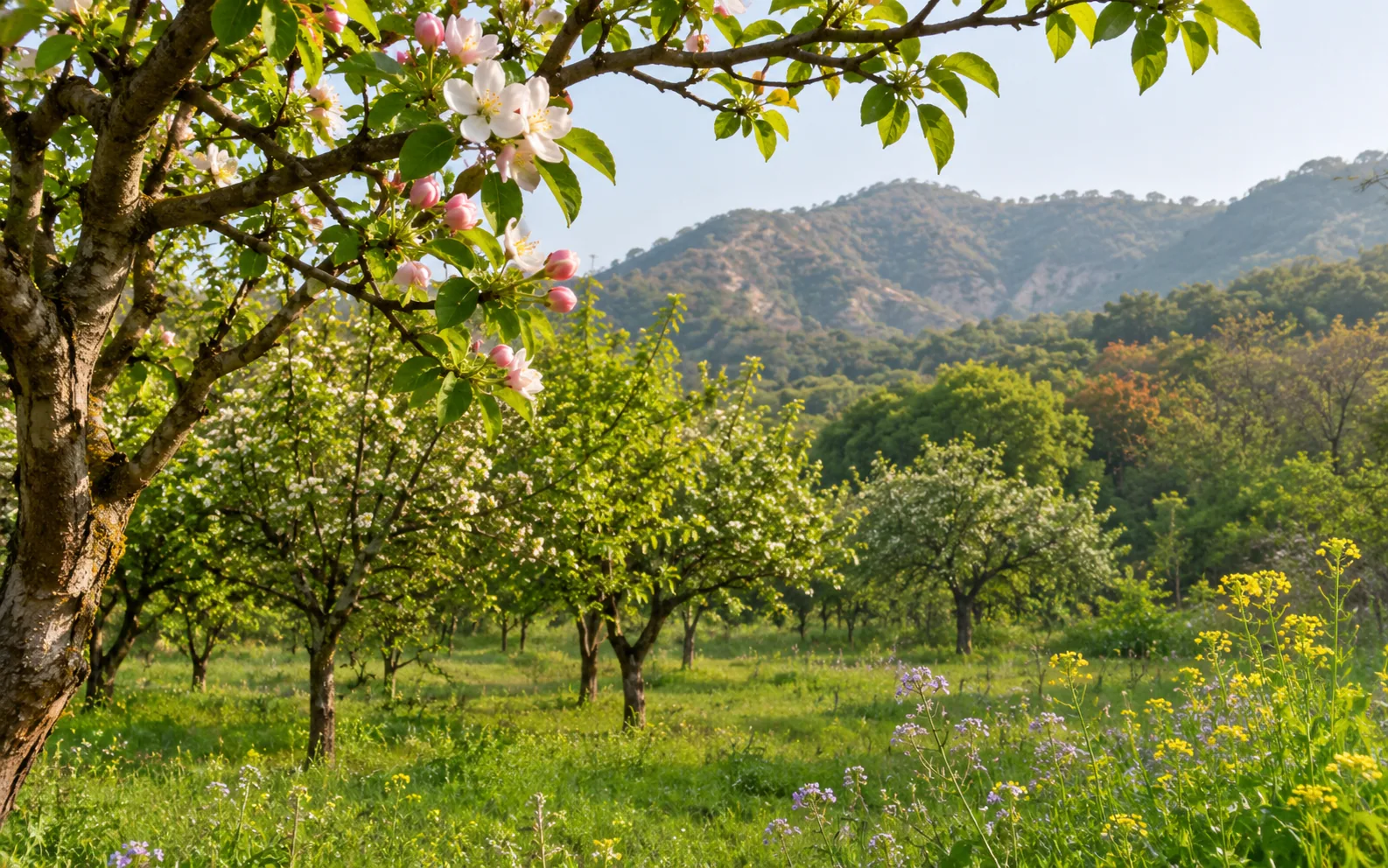
Drive from Chandigarh towards Kalka and the land rises so gently you barely notice. Then, just past Pinjore, the Shivalik hills appear.
Quick answer: Pinjore sits at about 1,820 ft between Chandigarh and Kalka, where the plains meet the first Shivalik hills. It's known for its 17th-century Mughal garden with mango and litchi orchards, near Bir Shikargah sanctuary.
Pinjore sits at about 1,820 feet, in a valley overlooking the Shivaliks, between Chandigarh (about 1,050 feet) and Kalka (about 2,150 feet). It's the last stretch of the plains before the hills, and it has its own character.
 A gentle rise from the plains to the first hills.
Pinjore Gardens
Pinjore is famous for its 17th-century Mughal garden, now called the Yadavindra Gardens. Laid out in the classic char-bagh pattern with a central waterway, it covers about 100 acres and includes mango and litchi orchards. It hosts an annual mango festival.
Mango country
The orchards around Pinjore fill spring evenings with the scent of mango blossom. Most of mango's visitors are small flies, not honeybees. Mango blossom and bees.
Bir Shikargah
About 5 miles from Pinjore lies Bir Shikargah Wildlife Sanctuary, about 1,900 acres of Shivalik foothill forest, notified in 1987. It's home to leopard, sambar and chital, and to the Jatayu Conservation Breeding Centre for critically endangered vultures.
Where the plains meet the hills
The edge between plains and hills is where landscapes mix: farm fields, orchards and gardens below; scrub and dry deciduous forest above. For bees, that mix is valuable, and it's part of what shapes the Kalka foothills. The Shivalik climate.
What we can't claim
The topic we were given asks about "sourcing where the Kalka hills flatten into the plains". We don't claim our honey comes from Pinjore or any one spot. Our Kalka jar is a foothill honey from the Kalka area.
A myth worth clearing up
"Garden and orchard honey is always mango or litchi honey." No. Bees in a mixed landscape work many plants. Only pollen analysis can show a single plant leading.
A day-trip ritual
Visit Pinjore Gardens in spring, when the mango trees flower. Then drive the last few miles to Kalka and watch the plains give way to the hills.
Common questions about Pinjore
How far is Pinjore from Kalka? They're neighbours on the Chandigarh–Kalka road, a short drive apart.
When is the Pinjore mango festival? In summer, when the mangoes ripen. Check local listings for dates.
Keep reading
- The Shivalik corridor
- The dense undergrowth
- The ridge flora
- The Pangi border margins
- The toy train wildflower trail
Part of our Kalka honey guide.
Where this comes from
- Pinjore at 554 m (1,818 ft); 17th-century Mughal garden, char-bagh layout, about 100 acres, mango and litchi orchards, mango festival: Wikipedia, Pinjore
- Bir Shikargah: 767 hectares (about 1,900 acres), 8 km (5 mi) from Pinjore, notified 1987, Jatayu vulture breeding centre, wildlife: Wikipedia, Bir Shikargarh Wildlife Sanctuary
- Heights approximate; the hills in the illustration are schematic.
Raw, unfiltered honey, bottled as it is. From where the plains meet the hills.
Find your Kalka jar, from ₹499 for ½ kg · or see what is coming next.
Not Your Beesness, sold on āsthālaya. Delivered across India.


