Honey kitchen · 4 min read
Sweetening the morning kadha: tulsi, ginger and pepper with honey
Every family has a kadha: tulsi, ginger, black pepper and cinnamon boiled down to a strong, hot brew. It's not a medicine, and we won't sell it as one. But it can taste much better, and honey added at the right moment is how.
By Akhil Verma, Co-founder, Not Your Beesness ·
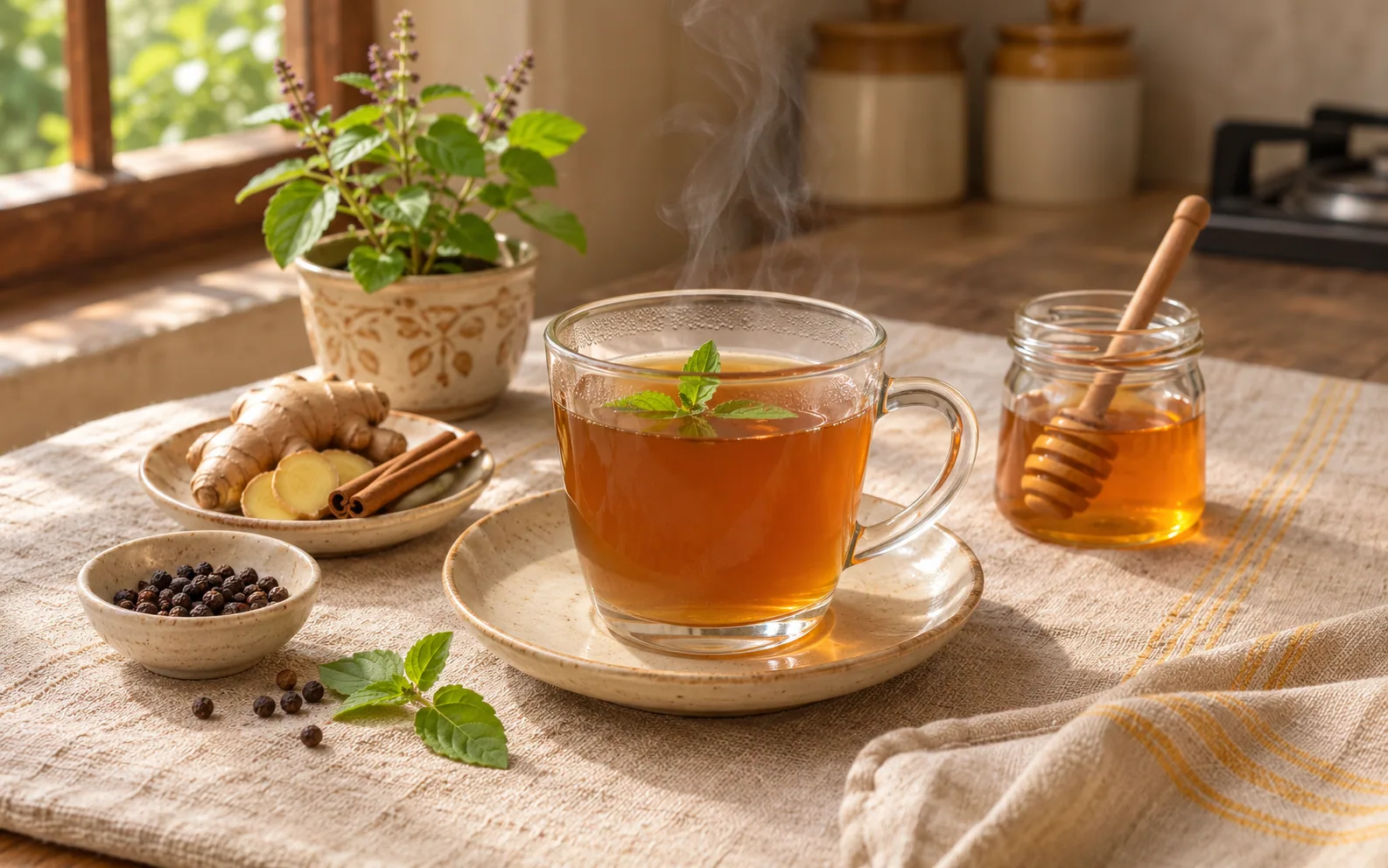
Kadha is strong, peppery and a little bitter. Honey stirred in once it has cooled a little makes it a drink you'll actually finish.
Quick answer: To make kadha, simmer tulsi, ginger, black pepper, cinnamon, cloves and raisins in water until reduced by half, strain, and stir in honey once it's sipping-warm. It's a tradition, not a treatment.
Kadha (or kaadha) is a decoction: spices and herbs boiled in water until the brew is strong. Recipes differ from home to home, but most include tulsi, ginger, black pepper and cinnamon. In 2020 the Ministry of AYUSH's advisory suggested a kadha of tulsi, cinnamon, black pepper, dry ginger and raisins, sweetened with jaggery or lemon.
We'll be clear about what this post is: a recipe. We don't claim kadha or honey prevents or treats any illness.
 Boil the spices, not the honey.
How to make it
Serves 2 · 15 minutes
- 2 cups water
- 8 to 10 tulsi leaves
- 1 inch fresh ginger, crushed (or ½ teaspoon dry ginger powder)
- 4 to 5 black peppercorns, crushed
- A small piece of cinnamon
- 2 cloves
- A few raisins (munakka, if you have them)
- 1 to 2 teaspoons honey
- A squeeze of lemon (optional)
- Boil. Put the water and everything except the honey and lemon in a pan and bring to the boil.
- Reduce. Simmer for 8 to 10 minutes, until it has reduced by about half and smells strongly of spice.
- Strain. Strain into two cups.
- Honey last. Wait until it's comfortable to sip, then stir in the honey and lemon.
Why not boil the honey?
Boiling darkens honey and dulls its aroma, and the Ayurvedic tradition itself warns against heating honey. Many families who make kadha every winter still keep that rule. What heat does to honey.
Which jar
- Lahaul is deeper and intensely aromatic. It stands up to pepper, ginger and clove. Our pick here.
- Kalka is warm and rounded, for a gentler cup.
Please note
- No honey for babies under 12 months, in kadha or anything else. When can my baby have honey?
- Kadha is strong. If you take regular medicines, are pregnant, or have stomach trouble, ask your doctor before drinking it daily.
- A fever, a cough that lasts, or trouble breathing needs a doctor, not a home remedy.
Common questions about kadha
Can I use jaggery instead? Yes, jaggery is the other traditional sweetener. Unlike honey, it can be boiled with the spices.
How strong should it be? That's personal. Simmer longer for a stronger brew, or add a little hot water to soften it.
Can I make it ahead? Make the strained brew ahead and keep it in the fridge for a day. Warm it gently, and add the honey after warming.
Keep reading
Part of our Honey kitchen guide.
Where this comes from
- Ministry of AYUSH, "Ayurveda's immunity boosting measures for self care during COVID-19 crisis" (March 2020), which suggested a herbal tea or decoction of tulsi, cinnamon, black pepper, dry ginger and raisins with jaggery or lemon. We quote it as tradition, not as evidence of any health effect
- Warnings against heating honey in the Ayurvedic tradition (Charaka Samhita) and the effect of heat on honey: see Honey in hot chai
- No honey under 12 months: see When can my baby have honey?
Raw, unfiltered honey, bottled as it is. For the first cold morning of the year.
Find your jar: Lahaul from ₹799 or Kalka from ₹499, for ½ kg · or see what is coming next.
Not Your Beesness, sold on āsthālaya. Delivered across India.